Gérard Ferey Author
Biography not available.

Browse all FOLKLORE books
Browse all GARDENS books
Browse all GRAPHIC NOVELS books
Browse all HISTORY - MEDIEVAL books
Browse all HUMOUR books
Browse all Juvenile Fiction : Biographical - Other books
Browse all Juvenile Fiction : Historical - Other books
Browse all Juvenile Fiction : Legends, Myths, & Fables - Other books
Browse all Juvenile Fiction : People & Places - Other books
Browse all Juvenile Fiction : People & Places - United States - Other books
Browse all Juvenile Fiction : Religious - Other books
Browse all Juvenile Nonfiction : History - Other books
Browse all Juvenile Nonfiction : Mathematics - Advanced books
Browse all Juvenile Nonfiction : People & Places - Other books
Browse all Juvenile Nonfiction : People & Places - United States - Othe books
Browse all LITERARY STUDIES books
Browse all LONDON books
Browse all Medical : Nursing - Mental Health books
Browse all MIND books
Browse all MUSEOLOGY books
Browse all NON-CLASSIFIABLE books
Browse all NONLINEAR SCIENCE books
Browse all POPULAR SCIENCE books
Browse all RELIGIOUS STUDIES books
Browse all SPIRIT books
Browse all SPORT books
Browse all TRAVEL WRITING books
 Out of Stock
Paperback · ISBN 9780000988539
Inclusive of GST and other taxes
Arriving at your doorstep in 2-3 days
Our logisitcs team will make sure everyitem is delivered safely
| ISBN | 9780000988539 |
|---|---|
| Publisher | World Scientific |
| Language | English |
| Page count | 264 |
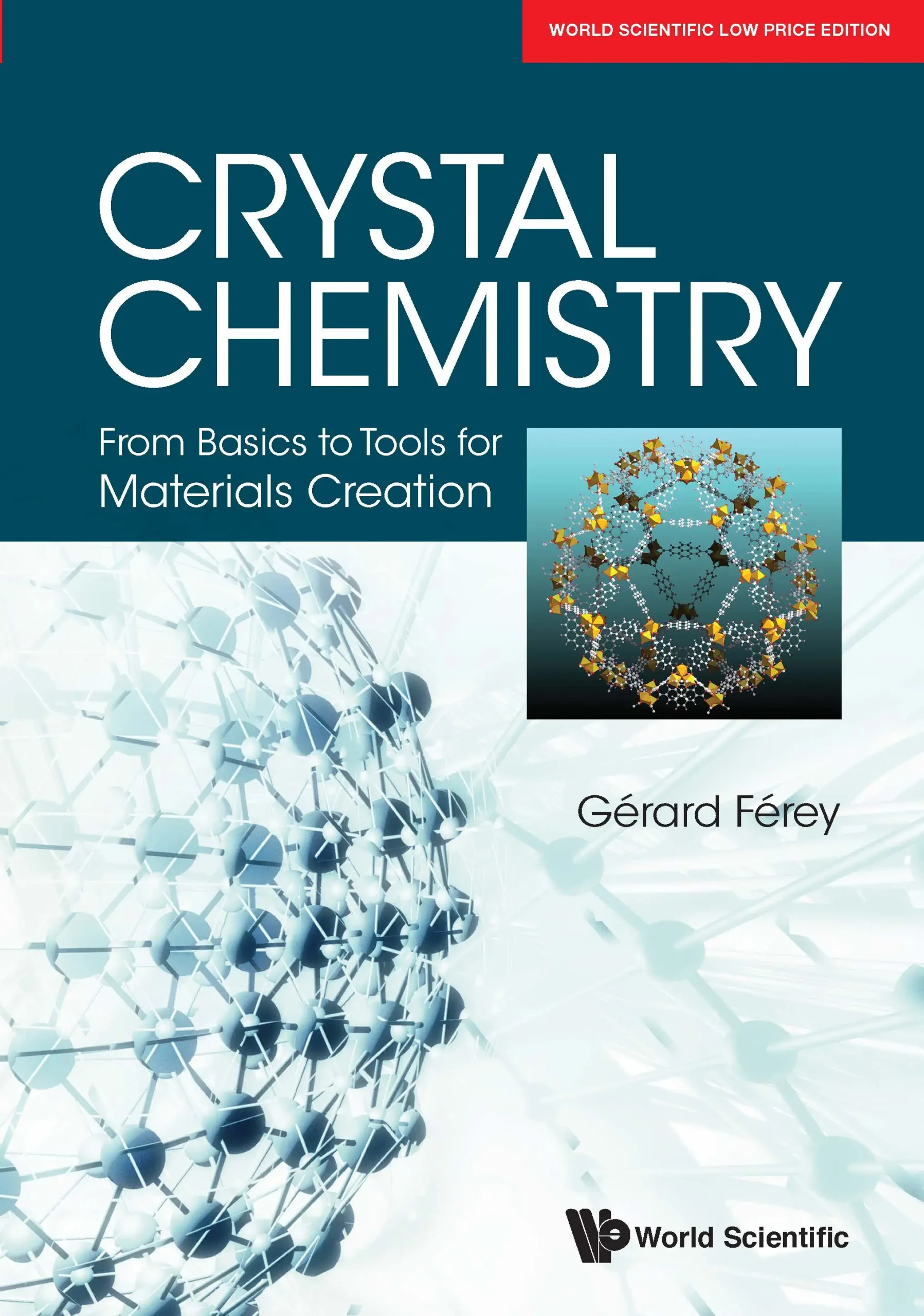
Devoted to a diverse group of solid state scientists, the book has two objectives, both relating to structural chemistry: (i) a progressive analytic familiarization with the main parameters that govern the organization of crystallized matter and related crystal structures, (ii) a study of what are the various ways to 'read' a structure far beyond its representation in scientific articles. Hence, the reader will, from numerous examples illustrated in color, analyze what are the main characteristics of these structures, from their geometric characteristics, their coordination polyhedra, their connections with the resulting dimensionalities of these solids, including also the defects they exhibit, before looking at possibilities to classify structures, within which recurrence laws can emerge. Chemists are required to understand the potentials of a new structure for becoming future materials scientists. The first part of the book is by no means a database for known structures, but facilitates a progressive understanding of the organization of the solid state. With these tools in hand, the reader is invited in the later part of the book to analyze new structures, and to also use new concepts for viewing structures in a more synthetic way for the future. Such new vision is already leading to the creation of completely new solids with outstanding characteristics that find applications in societal problems concerning energy, energy savings, environment and health.
Log in to write a review for this book.
No reviews yet. Be the first to share your opinion.
Biography not available.