David L Olson Author
Biography not available.

Browse all FOLKLORE books
Browse all GARDENS books
Browse all GRAPHIC NOVELS books
Browse all HISTORY - MEDIEVAL books
Browse all HUMOUR books
Browse all Juvenile Fiction : Biographical - Other books
Browse all Juvenile Fiction : Historical - Other books
Browse all Juvenile Fiction : Legends, Myths, & Fables - Other books
Browse all Juvenile Fiction : People & Places - Other books
Browse all Juvenile Fiction : People & Places - United States - Other books
Browse all Juvenile Fiction : Religious - Other books
Browse all Juvenile Nonfiction : History - Other books
Browse all Juvenile Nonfiction : Mathematics - Advanced books
Browse all Juvenile Nonfiction : People & Places - Other books
Browse all Juvenile Nonfiction : People & Places - United States - Othe books
Browse all LITERARY STUDIES books
Browse all LONDON books
Browse all Medical : Nursing - Mental Health books
Browse all MIND books
Browse all MUSEOLOGY books
Browse all NON-CLASSIFIABLE books
Browse all NONLINEAR SCIENCE books
Browse all POPULAR SCIENCE books
Browse all RELIGIOUS STUDIES books
Browse all SPIRIT books
Browse all SPORT books
Browse all TRAVEL WRITING books
 Out of Stock
Paperback · ISBN 9780000988607
Inclusive of GST and other taxes
Arriving at your doorstep in 2-3 days
Our logisitcs team will make sure everyitem is delivered safely
| ISBN | 9780000988607 |
|---|---|
| Publisher | World Scientific |
| Language | English |
| Page count | 244 |
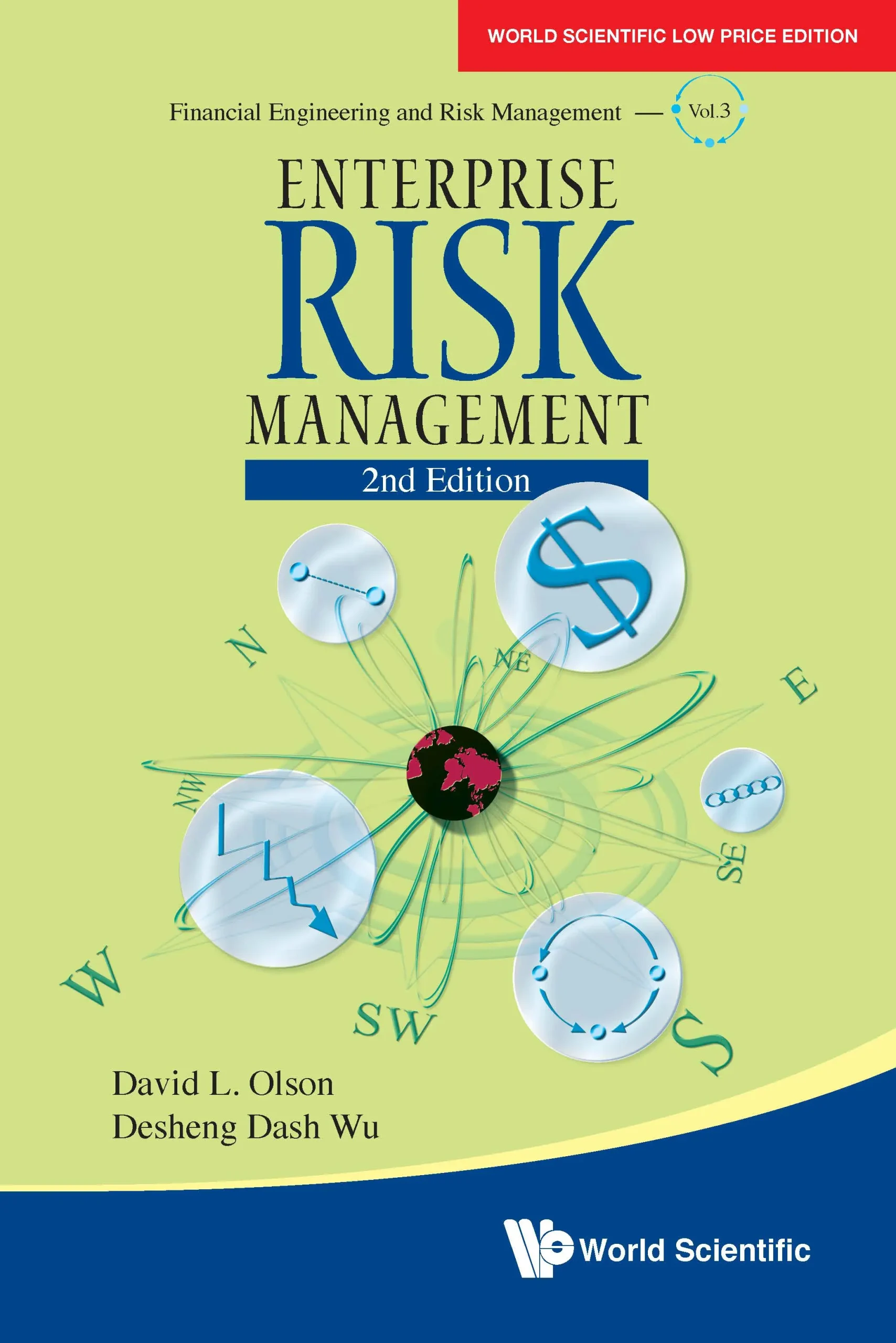
Risk is inherent in business. Without risk, there would be no motivation to conduct business. But a key principle is that organizations should accept risks that they are competent enough to deal with, and ?outsource? other risks to those who are more competent to deal with them (such as insurance companies). Enterprise Risk Management (2nd Edition) approaches enterprise risk management from the perspectives of accounting, supply chains, and disaster management, in addition to the core perspective of finance. While the first edition included the perspective of information systems, the second edition views this as part of supply chain management or else focused on technological specifics. It discusses analytical tools available to assess risk, such as balanced scorecards, risk matrices, multiple criteria analysis, simulation, data envelopment analysis, and financial risk measures.
Log in to write a review for this book.
No reviews yet. Be the first to share your opinion.
Biography not available.
Biography not available.