John Dirk, Walecka Author
Biography not available.

Browse all ART CRITICISM books
Browse all Ashworth books
Browse all FOLKLORE books
Browse all GARDENS books
Browse all GRAPHIC NOVELS books
Browse all Hamilton books
Browse all HISTORY - MEDIEVAL books
Browse all HUMOUR books
Browse all KINDRED books
Browse all LITERARY STUDIES books
Browse all LONDON books
Browse all Lozada books
Browse all Medical : Nursing - Mental Health books
Browse all MIND books
Browse all MUSEOLOGY books
Browse all NON-CLASSIFIABLE books
Browse all NONLINEAR SCIENCE books
Browse all Ormonde books
Browse all POPULAR SCIENCE books
Browse all RELIGIOUS STUDIES books
Browse all SPIRIT books
Browse all SPORT books
Browse all TRAVEL WRITING books
 Out of Stock
Paperback · ISBN 9780000990037
Inclusive of GST and other taxes
Arriving at your doorstep in 2-3 days
Our logisitcs team will make sure everyitem is delivered safely
| ISBN | 9780000990037 |
|---|---|
| Publisher | World Scientific |
| Language | English |
| Page count | 500 |
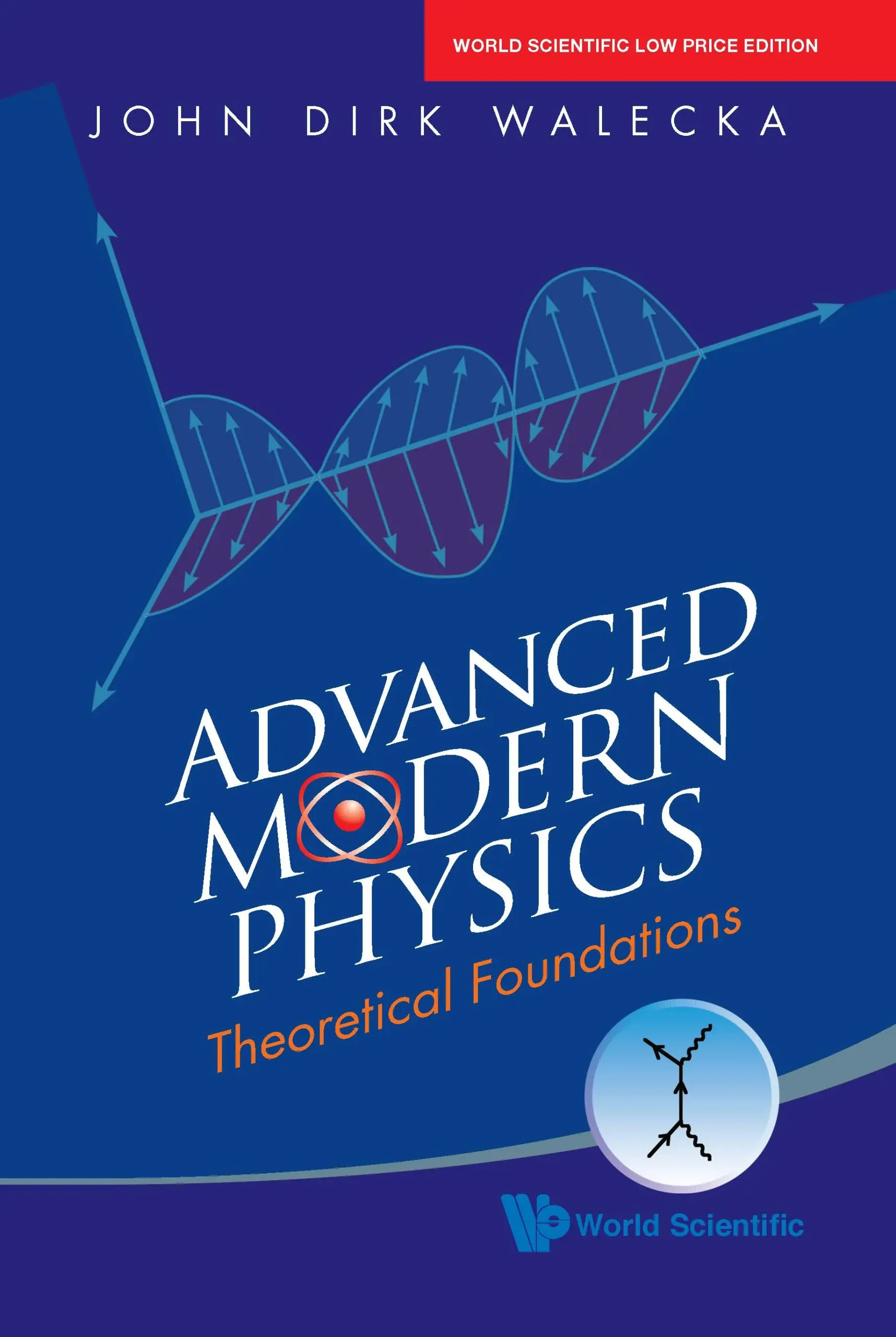
Our understanding of the physical world was revolutionized in the twentieth century — the era of “modern physics”. This book, aimed at the very best students, extends the coverage of the theoretical groundwork of today's physics presented in the previous volume: Introduction to Modern Physics: Theoretical Foundations (Vol. I). Typically, students have to wade through several courses to see many of these topics. The goal is to give them some idea of where they are going, and how things fit together, as they go along. The present book focuses on the following topics: reformulation of quantum mechanics, angular momentum, scattering theory, lagrangian field theory, symmetries, Feynman rules, quantum electrodynamics, including higher-order contributions, path integrals, and canonical transformations for quantum systems. Many problems are included that enhance and extend the coverage. The book assumes a mastery of the material in Vol. I, and the continued development of mathematical skills, including multivariable calculus and linear algebra. Several appendices provide important details, and any additional required mathematics. The reader should then find the text, together with the appendices and problems, to be self-contained. The aim is to cover the framework of modern theoretical physics in sufficient depth that things “make sense” to students, and, when finished, the reader should have an elementary working knowledge in the principal areas of theoretical physics of the twentieth century.
Log in to write a review for this book.
No reviews yet. Be the first to share your opinion.
Biography not available.