Frank J. Fabozzi Et Al. Author
Biography not available.

Browse all FOLKLORE books
Browse all GARDENS books
Browse all GRAPHIC NOVELS books
Browse all HISTORY - MEDIEVAL books
Browse all HUMOUR books
Browse all Juvenile Fiction : Biographical - Other books
Browse all Juvenile Fiction : Historical - Other books
Browse all Juvenile Fiction : Legends, Myths, & Fables - Other books
Browse all Juvenile Fiction : People & Places - Other books
Browse all Juvenile Fiction : People & Places - United States - Other books
Browse all Juvenile Fiction : Religious - Other books
Browse all Juvenile Nonfiction : History - Other books
Browse all Juvenile Nonfiction : Mathematics - Advanced books
Browse all Juvenile Nonfiction : People & Places - Other books
Browse all Juvenile Nonfiction : People & Places - United States - Othe books
Browse all LITERARY STUDIES books
Browse all LONDON books
Browse all Medical : Nursing - Mental Health books
Browse all MIND books
Browse all MUSEOLOGY books
Browse all NON-CLASSIFIABLE books
Browse all NONLINEAR SCIENCE books
Browse all POPULAR SCIENCE books
Browse all RELIGIOUS STUDIES books
Browse all SPIRIT books
Browse all SPORT books
Browse all TRAVEL WRITING books
 Out of Stock
Paperback · ISBN 9780000990389
Inclusive of GST and other taxes
Arriving at your doorstep in 2-3 days
Our logisitcs team will make sure everyitem is delivered safely
| ISBN | 9780000990389 |
|---|---|
| Publisher | World Scientific |
| Language | English |
| Page count | 516 |
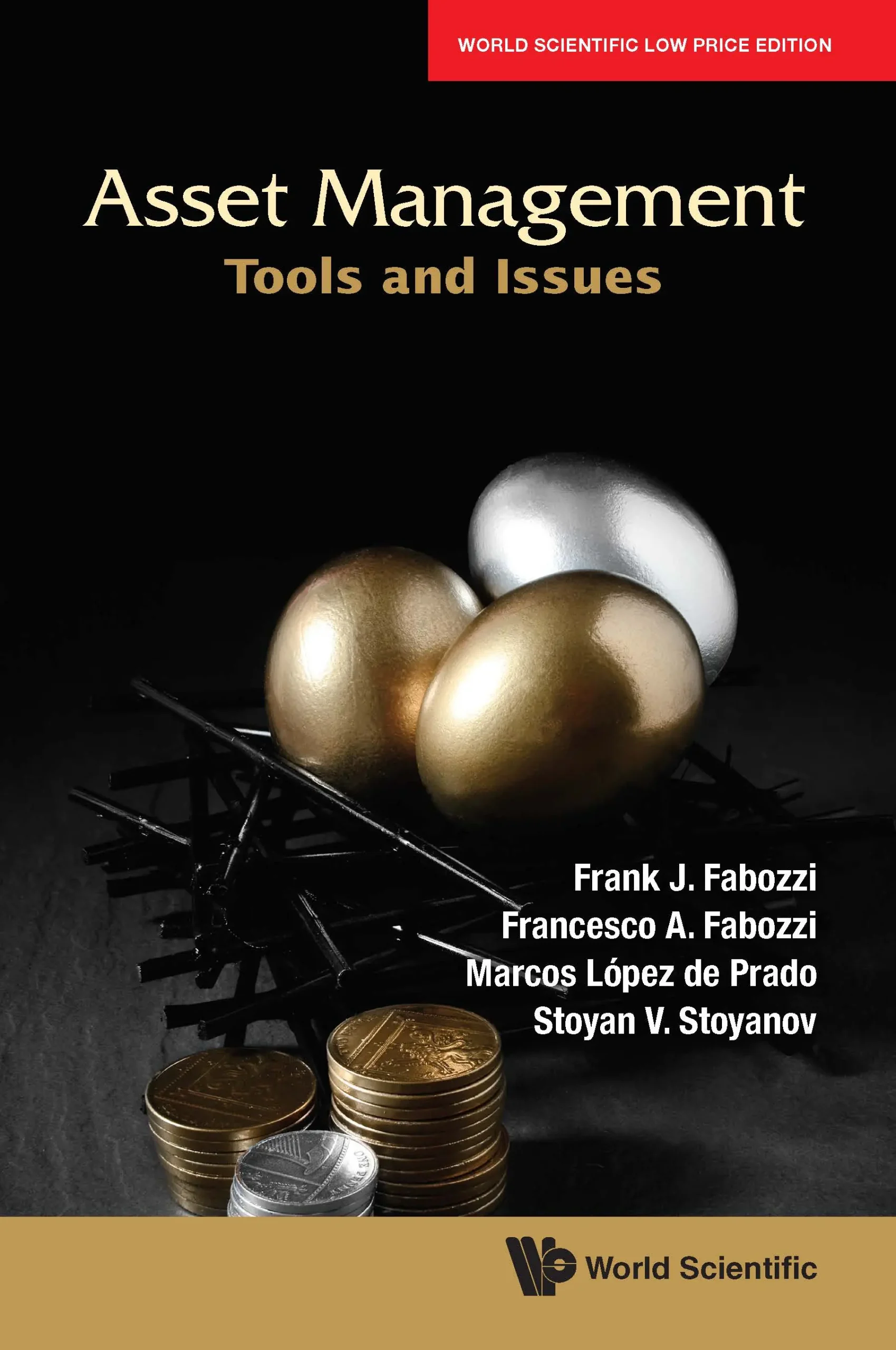
Long gone are the times when investors could make decisions based on intuition. Modern asset management draws on a wide-range of fields beyond financial theory: economics, financial accounting, econometrics/statistics, management science, operations research (optimization and Monte Carlo simulation), and more recently, data science (Big Data, machine learning, and artificial intelligence). The challenge in writing an institutional asset management book is that when tools from these different fields are applied in an investment strategy or an analytical framework for valuing securities, it is assumed that the reader is familiar with the fundamentals of these fields. Attempting to explain strategies and analytical concepts while also providing a primer on the tools from other fields is not the most effective way of describing the asset management process. Moreover, while an increasing number of investment models have been proposed in the asset management literature, there are challenges and issues in implementing these models. This book provides a description of the tools used in asset management as well as a more in-depth explanation of specialized topics and issues covered in the companion book, Fundamentals of Institutional Asset Management. The topics covered include the asset management business and its challenges, the basics of financial accounting, securitization technology, analytical tools (financial econometrics, Monte Carlo simulation, optimization models, and machine learning), alternative risk measures for asset allocation, securities finance, implementing quantitative research, quantitative equity strategies, transaction costs, multifactor models applied to equity and bond portfolio management, and backtesting methodologies. This pedagogic approach exposes the reader to the set of interdisciplinary tools that modern asset managers require in order to extract profits from data and processes.
Log in to write a review for this book.
No reviews yet. Be the first to share your opinion.
Biography not available.