Biggar, Nigel Author
Biography not available.

Browse all FOLKLORE books
Browse all GARDENS books
Browse all GRAPHIC NOVELS books
Browse all HISTORY - MEDIEVAL books
Browse all HUMOUR books
Browse all Juvenile Fiction : Biographical - Other books
Browse all Juvenile Fiction : Historical - Other books
Browse all Juvenile Fiction : Legends, Myths, & Fables - Other books
Browse all Juvenile Fiction : People & Places - Other books
Browse all Juvenile Fiction : People & Places - United States - Other books
Browse all Juvenile Fiction : Religious - Other books
Browse all Juvenile Nonfiction : History - Other books
Browse all Juvenile Nonfiction : Mathematics - Advanced books
Browse all Juvenile Nonfiction : People & Places - Other books
Browse all Juvenile Nonfiction : People & Places - United States - Othe books
Browse all LITERARY STUDIES books
Browse all LONDON books
Browse all Medical : Nursing - Mental Health books
Browse all MIND books
Browse all MUSEOLOGY books
Browse all NON-CLASSIFIABLE books
Browse all NONLINEAR SCIENCE books
Browse all POPULAR SCIENCE books
Browse all RELIGIOUS STUDIES books
Browse all SPIRIT books
Browse all SPORT books
Browse all TRAVEL WRITING books
 Out of Stock
Paperback · ISBN 9780008511678
Inclusive of GST and other taxes
Arriving at your doorstep in 10-15 days
Our logisitcs team will make sure everyitem is delivered safely
| ISBN | 9780008511678 |
|---|---|
| Publisher | William Collins |
| Publication date | March 2024 |
| Language | English |
| MRP | £12.99 GBP |
| Page count | 100 |
| Item weight | 84 g |
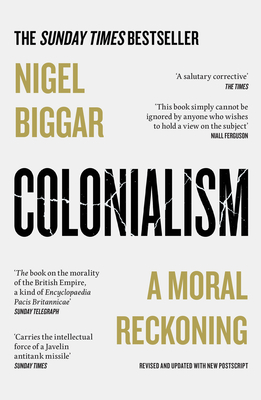
A new assessment of the West's colonial record
In the wake of the dissolution of the Soviet empire in 1989, many believed that we had arrived at the 'End of History' - that the global dominance of liberal democracy had been secured forever.
Now however, with Russia rattling its sabre on the borders of Europe and China rising to challenge the post-1945 world order, the liberal West faces major threats.
These threats are not only external. Especially in the Anglosphere, the 'decolonisation' movement corrodes the West's self-confidence by retelling the history of European and American colonial dominance as a litany of racism, exploitation, and massively murderous violence.
Nigel Biggar tests this indictment, addressing the crucial questions in eight chapters: Was the British Empire driven primarily by greed and the lust to dominate? Should we speak of 'colonialism and slavery' in the same breath, as if they were identical? Was the Empire essentially racist? How far was it based on the theft of land? Did it involve genocide? Was it driven fundamentally by the motive of economic exploitation? Was undemocratic colonial government necessarily illegitimate? and, Was the Empire essentially violent, and its violence pervasively racist and terroristic?
Biggar makes clear that, like any other long-standing state, the British Empire involved elements of injustice, sometimes appalling. On occasions it was culpably incompetent and presided over moments of dreadful tragedy.
Nevertheless, from the early 1800s the Empire was committed to abolishing the slave trade in the name of a Christian conviction of the basic equality of all human beings. It ended endemic inter-tribal warfare, opened local economies to the opportunities of global trade, moderated the impact of inescapable modernisation, established the rule of law and liberal institutions such as a free press, and spent itself in defeating the murderously racist Nazi and Japanese empires in the Second World War.
As encyclopaedic in historical breadth as it is penetrating in analytical depth, Colonialism offers a moral inquest into the colonial past, forensically contesting damaging falsehoods and thereby helping to rejuvenate faith in the West's future.
Log in to write a review for this book.
No reviews yet. Be the first to share your opinion.
Biography not available.