Winnik, S Editor
Biography not available.

Browse all ART CRITICISM books
Browse all Ashworth books
Browse all FOLKLORE books
Browse all GARDENS books
Browse all GRAPHIC NOVELS books
Browse all Hamilton books
Browse all HISTORY - MEDIEVAL books
Browse all HUMOUR books
Browse all Juvenile Fiction : Biographical - Other books
Browse all Juvenile Fiction : Historical - Other books
Browse all Juvenile Fiction : Legends, Myths, & Fables - Other books
Browse all Juvenile Fiction : People & Places - Other books
Browse all Juvenile Fiction : People & Places - United States - Other books
Browse all Juvenile Fiction : Religious - Other books
Browse all Juvenile Nonfiction : History - Other books
Browse all Juvenile Nonfiction : Mathematics - Advanced books
Browse all Juvenile Nonfiction : People & Places - Other books
Browse all Juvenile Nonfiction : People & Places - United States - Othe books
Browse all KINDRED books
Browse all LITERARY STUDIES books
Browse all LONDON books
Browse all Lozada books
Browse all Medical : Nursing - Mental Health books
Browse all MIND books
Browse all MUSEOLOGY books
Browse all NON-CLASSIFIABLE books
Browse all NONLINEAR SCIENCE books
Browse all Ormonde books
Browse all POPULAR SCIENCE books
Browse all RELIGIOUS STUDIES books
Browse all SPIRIT books
Browse all SPORT books
Browse all TRAVEL WRITING books
 Out of Stock
Hardback · ISBN 9780081007143
Inclusive of GST and other taxes
Arriving at your doorstep in 10-15 days
Our logisitcs team will make sure everyitem is delivered safely
| ISBN | 9780081007143 |
|---|---|
| Publisher | Woodhead Publishing |
| Publication date | December 2015 |
| Language | English |
| MRP | £166.00 GBP |
| Page count | 162 |
| Item weight | 86 g |
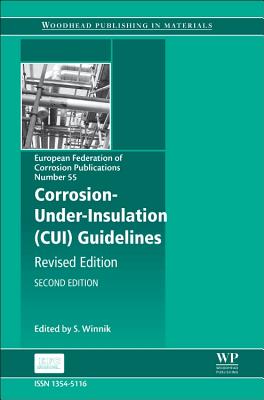
Corrosion-under-insulation (CUI) refers to the external corrosion of piping and vessels that occurs underneath externally clad/jacketed insulation as a result of the penetration of water. By its very nature CUI tends to remain undetected until the insulation and cladding/jacketing is removed to allow inspection or when leaks occur. CUI is a common problem shared by the refining, petrochemical, power, industrial, onshore and offshore industries.
In the first edition of this book published in 2008, the EFC Working Parties WP13 and WP15 engaged together to provide guidelines on managing CUI with contributions from a number of European refining, petrochemical and offshore companies. The guidelines are intended for use on all plants and installation that contain insulated vessels, piping and equipment. The guidelines cover a risk-based inspection methodology for CUI, inspection techniques and recommended best practice for mitigating CUI, including design of plant and equipment, coatings and the use of thermal spray techniques, types of insulation, cladding/jacketing materials and protection guards. The guidelines also include case studies.
The original document first published in 2008 was very successful and provided an important resource in the continuing battle to mitigate CUI. Many members of the EFC corrosion community requested an update and this has taken between 18-24 months to do so. Hopefully this revised document will continue to serve the community providing a practical source of information on how to monitor and manage insulated systems.
Log in to write a review for this book.
No reviews yet. Be the first to share your opinion.
Biography not available.