Schowalter, Timothy D. Author
Biography not available.

Browse all FOLKLORE books
Browse all GARDENS books
Browse all GRAPHIC NOVELS books
Browse all HISTORY - MEDIEVAL books
Browse all HUMOUR books
Browse all Juvenile Fiction : Biographical - Other books
Browse all Juvenile Fiction : Historical - Other books
Browse all Juvenile Fiction : Legends, Myths, & Fables - Other books
Browse all Juvenile Fiction : People & Places - Other books
Browse all Juvenile Fiction : People & Places - United States - Other books
Browse all Juvenile Fiction : Religious - Other books
Browse all Juvenile Nonfiction : History - Other books
Browse all Juvenile Nonfiction : Mathematics - Advanced books
Browse all Juvenile Nonfiction : People & Places - Other books
Browse all Juvenile Nonfiction : People & Places - United States - Othe books
Browse all LITERARY STUDIES books
Browse all LONDON books
Browse all Medical : Nursing - Mental Health books
Browse all MIND books
Browse all MUSEOLOGY books
Browse all NON-CLASSIFIABLE books
Browse all NONLINEAR SCIENCE books
Browse all POPULAR SCIENCE books
Browse all RELIGIOUS STUDIES books
Browse all SPIRIT books
Browse all SPORT books
Browse all TRAVEL WRITING books
 Out of Stock
Hardback · ISBN 9780128030332
Inclusive of GST and other taxes
Arriving at your doorstep in 10-15 days
Our logisitcs team will make sure everyitem is delivered safely
| ISBN | 9780128030332 |
|---|---|
| Publisher | Academic Press |
| Publication date | August 2016 |
| Language | English |
| MRP | £73.99 GBP |
| Page count | 776 |
| Item weight | 338 g |
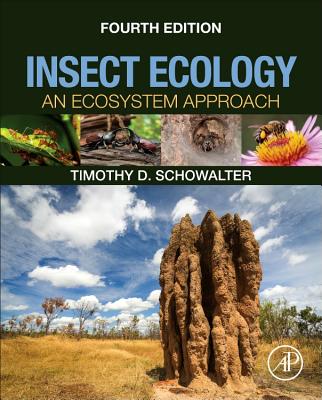
Insect Ecology: An Ecosystem Approach, Fourth Edition, follows a hierarchical organization that begins with relatively easy-to-understand chapters on adaptive responses of insect populations to various environmental changes, disturbances, and anthropogenic activities, how insects find food and habitat resources, and how insects allocate available energy and nutrients.
Chapters build on fundamental information to show how insect populations respond to changing environmental conditions, including spatial and temporal distribution of food and habitat. The next section integrates populations of interacting species within communities and how these interactions determine structure of communities over time and space.
Other works in insect ecology stop there, essentially limiting presentation of insect ecology to evolutionary responses of insects to their environment, including the activities of other species. The unique aspect of this book is its four chapters on ecosystem structure and function, and how herbivores, pollinators, seed predators, and detritivores drive ecosystem dynamics and contribute to ecosystem stability.
Log in to write a review for this book.
No reviews yet. Be the first to share your opinion.
Biography not available.