Saint-Amour, Paul K Author
Biography not available.

Browse all FOLKLORE books
Browse all GARDENS books
Browse all GRAPHIC NOVELS books
Browse all HISTORY - MEDIEVAL books
Browse all HUMOUR books
Browse all Juvenile Fiction : Biographical - Other books
Browse all Juvenile Fiction : Historical - Other books
Browse all Juvenile Fiction : Legends, Myths, & Fables - Other books
Browse all Juvenile Fiction : People & Places - Other books
Browse all Juvenile Fiction : People & Places - United States - Other books
Browse all Juvenile Fiction : Religious - Other books
Browse all Juvenile Nonfiction : History - Other books
Browse all Juvenile Nonfiction : Mathematics - Advanced books
Browse all Juvenile Nonfiction : People & Places - Other books
Browse all Juvenile Nonfiction : People & Places - United States - Othe books
Browse all LITERARY STUDIES books
Browse all LONDON books
Browse all Medical : Nursing - Mental Health books
Browse all MIND books
Browse all MUSEOLOGY books
Browse all NON-CLASSIFIABLE books
Browse all NONLINEAR SCIENCE books
Browse all POPULAR SCIENCE books
Browse all RELIGIOUS STUDIES books
Browse all SPIRIT books
Browse all SPORT books
Browse all TRAVEL WRITING books
 Out of Stock
TENSE FUTURE
Paperback · ISBN 9780190200954
Inclusive of GST and other taxes
Arriving at your doorstep in 10-15 days
Our logisitcs team will make sure everyitem is delivered safely
| ISBN | 9780190200954 |
|---|---|
| Subtitle | TENSE FUTURE |
| Publisher | Oxford University Press |
| Publication date | March 2015 |
| Language | English |
| MRP | £45.99 GBP |
| Page count | 364 |
| Item weight | 124 g |
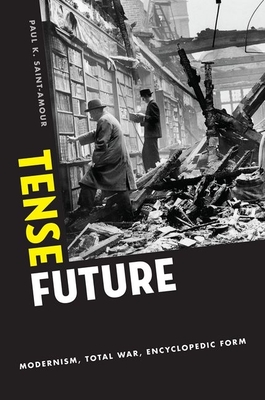
Total war: a conflict that exempts no one, disregarding any difference between soldier and civilian. Tense Future forever alters our understanding of the concept of total war by tracing its emergence during the First World War, its incubation in air power theory between the wars, and above all its profound partiality. For total war, during most of the twentieth century, meant conflict between imperial nation states; it did not include the violence those states routinely visited on colonial subjects during peacetime. Tacking back and forth between metropole and colony, between world war and police action, Saint-Amour describes the interwar refashioning of a world system of violence-production, one that remains largely intact in our own moment of perpetual interwar.
Log in to write a review for this book.
No reviews yet. Be the first to share your opinion.
Biography not available.