Liu, Fei-Wen Author
Biography not available.

Browse all FOLKLORE books
Browse all GARDENS books
Browse all GRAPHIC NOVELS books
Browse all HISTORY - MEDIEVAL books
Browse all HUMOUR books
Browse all Juvenile Fiction : Biographical - Other books
Browse all Juvenile Fiction : Historical - Other books
Browse all Juvenile Fiction : Legends, Myths, & Fables - Other books
Browse all Juvenile Fiction : People & Places - Other books
Browse all Juvenile Fiction : People & Places - United States - Other books
Browse all Juvenile Fiction : Religious - Other books
Browse all Juvenile Nonfiction : History - Other books
Browse all Juvenile Nonfiction : Mathematics - Advanced books
Browse all Juvenile Nonfiction : People & Places - Other books
Browse all Juvenile Nonfiction : People & Places - United States - Othe books
Browse all LITERARY STUDIES books
Browse all LONDON books
Browse all Medical : Nursing - Mental Health books
Browse all MIND books
Browse all MUSEOLOGY books
Browse all NON-CLASSIFIABLE books
Browse all NONLINEAR SCIENCE books
Browse all POPULAR SCIENCE books
Browse all RELIGIOUS STUDIES books
Browse all SPIRIT books
Browse all SPORT books
Browse all TRAVEL WRITING books
 Out of Stock
Hardback · ISBN 9780190210403
Inclusive of GST and other taxes
Arriving at your doorstep in 10-15 days
Our logisitcs team will make sure everyitem is delivered safely
| ISBN | 9780190210403 |
|---|---|
| Publisher | OXFORD UNIV PR |
| Publication date | June 2015 |
| Language | English |
| MRP | £102.50 GBP |
| Page count | 268 |
| Item weight | 122 g |
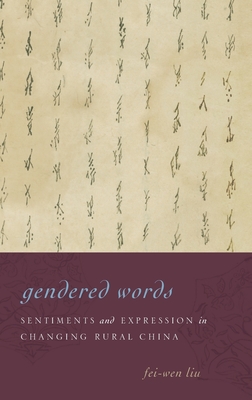
This book explores nüshu in conjunction with the local women's singing tradition (nüge), tied into the life narratives of four women born in the 1910s, 1930s, and 1960s respectively, each representative in her own way: a nüge singer (majority of Jiangyong women), a child bride (enjoying not much nüshu/nüge), the last living traditionally-trained nüshu writer, and a new-generation nüshu transmitter. Altogether, their stories unfold peasant women's lifeworlds and forefronts various aspects of China's changing social milieu over the past century. They show how nüshu/nüge-registering women's sense and sensibilities and providing agency to subjects who have been silenced by history-constitute a reflexive social field whereby women share life stories to expand the horizon of their personal worldviews and probe beneath the surface of their existence for new inspiration in their process of becoming. With the concept of "expressive depths," this book opens a new vista on how women express themselves through multiple forms that simultaneously echo and critique the mainstream social system and urges a rethinking of how forms of expression define and confine the voice carried. Examining the multiple efforts undertaken by scholars, local officials, and cultural entrepreneurs to revive nüshu which have ironically threatened to disfigure its true face, this book poses a question of whither nüshu? Should it be transformed, or has it reached a perfect end point from which to fade into history?
Log in to write a review for this book.
No reviews yet. Be the first to share your opinion.
Biography not available.