Richardson, Henry Author
Biography not available.

Browse all FOLKLORE books
Browse all GARDENS books
Browse all GRAPHIC NOVELS books
Browse all HISTORY - MEDIEVAL books
Browse all HUMOUR books
Browse all Juvenile Fiction : Biographical - Other books
Browse all Juvenile Fiction : Historical - Other books
Browse all Juvenile Fiction : Legends, Myths, & Fables - Other books
Browse all Juvenile Fiction : People & Places - Other books
Browse all Juvenile Fiction : People & Places - United States - Other books
Browse all Juvenile Fiction : Religious - Other books
Browse all Juvenile Nonfiction : History - Other books
Browse all Juvenile Nonfiction : Mathematics - Advanced books
Browse all Juvenile Nonfiction : People & Places - Other books
Browse all Juvenile Nonfiction : People & Places - United States - Othe books
Browse all LITERARY STUDIES books
Browse all LONDON books
Browse all Medical : Nursing - Mental Health books
Browse all MIND books
Browse all MUSEOLOGY books
Browse all NON-CLASSIFIABLE books
Browse all NONLINEAR SCIENCE books
Browse all POPULAR SCIENCE books
Browse all RELIGIOUS STUDIES books
Browse all SPIRIT books
Browse all SPORT books
Browse all TRAVEL WRITING books
 Out of Stock
Hardback · ISBN 9780190247744
Inclusive of GST and other taxes
Arriving at your doorstep in 10-15 days
Our logisitcs team will make sure everyitem is delivered safely
| ISBN | 9780190247744 |
|---|---|
| Publisher | OXFORD UNIV PR |
| Publication date | September 2018 |
| Language | English |
| MRP | £52.00 GBP |
| Page count | 324 |
| Item weight | 139 g |
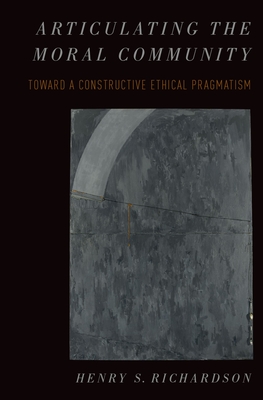
Unlike political communities, which are centralized, non-inclusive, and backed by coercion, the moral community is decentralized, inclusive, and not coercively backed. This book explains in detail how its structure arises from efforts by individuals to work out intelligently with one another how to respond to morally important concerns. Developing a novel theory of dyadic rights and duties based on this phenomenon, the book argues that conscientious efforts of this kind provide moral input, authoritative only over the parties involved. After sufficient uptake and reflective acceptance by the moral community, however, these innovations become new moral norms.
This account of the moral community's moral authority is motivated by, and supports, a type of normative ethical theory, constructive ethical pragmatism, which-to use an unfashionable distinction defended in the book-rejects the consequentialist claim that rightness is to be defined as a function of goodness and the deontological claim that principles of right stand fixed, independently of the good. It holds, rather, that what we ought to do depends on our continuing efforts to specify the right and the good in light of each other.
Log in to write a review for this book.
No reviews yet. Be the first to share your opinion.
Biography not available.