Barner, David Editor
Biography not available.

Browse all ART CRITICISM books
Browse all Ashworth books
Browse all FOLKLORE books
Browse all GARDENS books
Browse all GRAPHIC NOVELS books
Browse all Hamilton books
Browse all HISTORY - MEDIEVAL books
Browse all HUMOUR books
Browse all Juvenile Fiction : Biographical - Other books
Browse all Juvenile Fiction : Historical - Other books
Browse all Juvenile Fiction : Legends, Myths, & Fables - Other books
Browse all Juvenile Fiction : People & Places - Other books
Browse all Juvenile Fiction : People & Places - United States - Other books
Browse all Juvenile Fiction : Religious - Other books
Browse all Juvenile Nonfiction : History - Other books
Browse all Juvenile Nonfiction : Mathematics - Advanced books
Browse all Juvenile Nonfiction : People & Places - Other books
Browse all Juvenile Nonfiction : People & Places - United States - Othe books
Browse all KINDRED books
Browse all LITERARY STUDIES books
Browse all LONDON books
Browse all Lozada books
Browse all Medical : Nursing - Mental Health books
Browse all MIND books
Browse all MUSEOLOGY books
Browse all NON-CLASSIFIABLE books
Browse all NONLINEAR SCIENCE books
Browse all Ormonde books
Browse all POPULAR SCIENCE books
Browse all RELIGIOUS STUDIES books
Browse all SPIRIT books
Browse all SPORT books
Browse all TRAVEL WRITING books
 Out of Stock
Hardback · ISBN 9780190467630
Inclusive of GST and other taxes
Arriving at your doorstep in 10-15 days
Our logisitcs team will make sure everyitem is delivered safely
| ISBN | 9780190467630 |
|---|---|
| Publisher | OXFORD UNIV PR |
| Publication date | July 2016 |
| Language | English |
| MRP | £100.00 GBP |
| Page count | 408 |
| Item weight | 165 g |
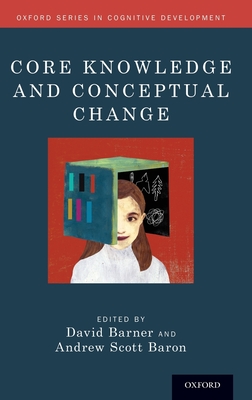
Core Knowledge and Conceptual Change provides a unique theoretical and empirical introduction to the study of conceptual development, documenting key advances in case studies, including ground-breaking science on human representations of language, objects, number, events, color, space, time, beliefs, and desires. Additionally, it explores how humans engage in moral reasoning and causal explanation: Are humans born good and tainted by an imperfect world, or do we need to teach children to be moral? Could a concept like "freedom" be woven into the human soul, or is it a historical invention, constructed over generations of humans? Written by an eminent list of contributors renowned in child development and cognitive science, this book delves widely, and deeply, into the cognitive tools available at birth that are repurposed, combined, and transformed to complex, abstract adult conceptual representations, and should be of interest to developmental psychologists, linguists, philosophers, and students of cognitive science.
Log in to write a review for this book.
No reviews yet. Be the first to share your opinion.
Biography not available.
Biography not available.