Lieberman, Debra Author
Biography not available.

Browse all FOLKLORE books
Browse all GARDENS books
Browse all GRAPHIC NOVELS books
Browse all HISTORY - MEDIEVAL books
Browse all HUMOUR books
Browse all Juvenile Fiction : Biographical - Other books
Browse all Juvenile Fiction : Historical - Other books
Browse all Juvenile Fiction : Legends, Myths, & Fables - Other books
Browse all Juvenile Fiction : People & Places - Other books
Browse all Juvenile Fiction : People & Places - United States - Other books
Browse all Juvenile Fiction : Religious - Other books
Browse all Juvenile Nonfiction : History - Other books
Browse all Juvenile Nonfiction : Mathematics - Advanced books
Browse all Juvenile Nonfiction : People & Places - Other books
Browse all Juvenile Nonfiction : People & Places - United States - Othe books
Browse all LITERARY STUDIES books
Browse all LONDON books
Browse all Medical : Nursing - Mental Health books
Browse all MIND books
Browse all MUSEOLOGY books
Browse all NON-CLASSIFIABLE books
Browse all NONLINEAR SCIENCE books
Browse all POPULAR SCIENCE books
Browse all RELIGIOUS STUDIES books
Browse all SPIRIT books
Browse all SPORT books
Browse all TRAVEL WRITING books
 Out of Stock
Hardback · ISBN 9780190491291
Inclusive of GST and other taxes
Arriving at your doorstep in 10-15 days
Our logisitcs team will make sure everyitem is delivered safely
| ISBN | 9780190491291 |
|---|---|
| Publisher | OXFORD UNIV PR |
| Publication date | August 2018 |
| Language | English |
| MRP | £28.99 GBP |
| Page count | 266 |
| Item weight | 122 g |
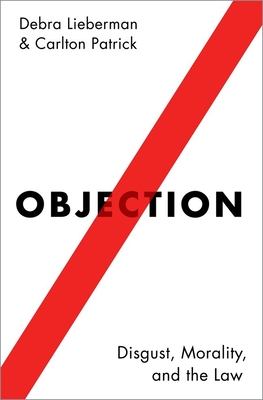
In Objection, psychologists Debra Lieberman and Carlton Patrick examine disgust and its impact on the legal system to show why the things that we find stomach-turning so often become the things that we render unlawful. Shedding light on the evolutionary and psychological origins of disgust, the authors reveal how ancient human intuitions about what is safe to eat or touch, or who would make an advantageous mate, have become co-opted by moral systems designed to condemn behavior and identify groups of people ripe for marginalization. Over time these moral stances have made their way into legal codes, and disgust has thereby served as the impetus for laws against behaviors almost universally held to be "disgusting" (corpse desecration, bestiality) - and as the implicit justification for more controversial prohibitions (homosexuality, use of pornography). Written with a critical eye on current events, Lieberman and Patrick build a case for a more reasoned approach to lawmaking in a system that often confuses "gross" with "wrong."
Log in to write a review for this book.
No reviews yet. Be the first to share your opinion.
Biography not available.
Biography not available.