Tauber, Alfred I. Author
Biography not available.

Browse all FOLKLORE books
Browse all GARDENS books
Browse all GRAPHIC NOVELS books
Browse all HISTORY - MEDIEVAL books
Browse all HUMOUR books
Browse all Juvenile Fiction : Biographical - Other books
Browse all Juvenile Fiction : Historical - Other books
Browse all Juvenile Fiction : Legends, Myths, & Fables - Other books
Browse all Juvenile Fiction : People & Places - Other books
Browse all Juvenile Fiction : People & Places - United States - Other books
Browse all Juvenile Fiction : Religious - Other books
Browse all Juvenile Nonfiction : History - Other books
Browse all Juvenile Nonfiction : Mathematics - Advanced books
Browse all Juvenile Nonfiction : People & Places - Other books
Browse all Juvenile Nonfiction : People & Places - United States - Othe books
Browse all LITERARY STUDIES books
Browse all LONDON books
Browse all Medical : Nursing - Mental Health books
Browse all MIND books
Browse all MUSEOLOGY books
Browse all NON-CLASSIFIABLE books
Browse all NONLINEAR SCIENCE books
Browse all POPULAR SCIENCE books
Browse all RELIGIOUS STUDIES books
Browse all SPIRIT books
Browse all SPORT books
Browse all TRAVEL WRITING books
 Out of Stock
Hardback · ISBN 9780190651244
Inclusive of GST and other taxes
Arriving at your doorstep in 10-15 days
Our logisitcs team will make sure everyitem is delivered safely
| ISBN | 9780190651244 |
|---|---|
| Publisher | OXFORD UNIV PR |
| Publication date | March 2017 |
| Language | English |
| MRP | £105.00 GBP |
| Page count | 324 |
| Item weight | 139 g |
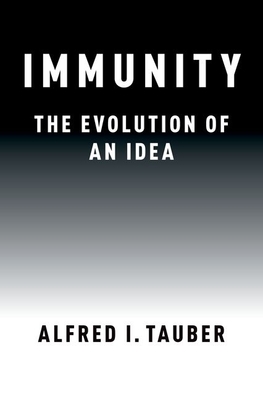
Modern immunology traditionally conceives of the immune system as providing defense against pathogens. Alfred I. Tauber criticizes this conception of immunity as too narrow, because it discounts much of the immune system's other normal functions. These include active tolerance of nutritional exchanges with the environment and the stabilization of cooperative relationships with resident micro-organisms. An expanded account extends immunity's functional role from singular 'defense' to broadened discernment of environmental 'exchange.' This ecological perspective has profound theoretical implications, for the basic notion of immune identity is reconfigured: highlighting the organism as a holobiont (a consortium of diverse organisms living in cooperative relationships) challenges prevailing concepts of individuality and the self/nonself dichotomy heretofore organizing immune theory. Indeed, if theoretical interest is focused on the challenges of maintaining immune balance in the full ecological context of the organism, then immune regulation assumes new complexity. Tauber maintains that the key to unravelling that puzzle requires a critical re-assessment of the cognitive processes that underlie immune effector functions. Accordingly, he provides the outline of a re-formulated 'cognitive paradigm' that dispenses with agent-based models and adopts an ecologically conceived understanding of perception and information processing. The implications of this revised configuration of immunity and its deconstructed notions of individuality and selfhood have wide significance for philosophers and life scientists working in immunology, ecology, and the cognitive sciences.
Log in to write a review for this book.
No reviews yet. Be the first to share your opinion.
Biography not available.