Gregory Author
Biography not available.

Browse all ART CRITICISM books
Browse all Ashworth books
Browse all FOLKLORE books
Browse all GARDENS books
Browse all GRAPHIC NOVELS books
Browse all Hamilton books
Browse all HISTORY - MEDIEVAL books
Browse all HUMOUR books
Browse all Juvenile Fiction : Biographical - Other books
Browse all Juvenile Fiction : Historical - Other books
Browse all Juvenile Fiction : Legends, Myths, & Fables - Other books
Browse all Juvenile Fiction : People & Places - Other books
Browse all Juvenile Fiction : People & Places - United States - Other books
Browse all Juvenile Fiction : Religious - Other books
Browse all Juvenile Nonfiction : History - Other books
Browse all Juvenile Nonfiction : Mathematics - Advanced books
Browse all Juvenile Nonfiction : People & Places - Other books
Browse all Juvenile Nonfiction : People & Places - United States - Othe books
Browse all KINDRED books
Browse all LITERARY STUDIES books
Browse all LONDON books
Browse all Lozada books
Browse all Medical : Nursing - Mental Health books
Browse all MIND books
Browse all MUSEOLOGY books
Browse all NON-CLASSIFIABLE books
Browse all NONLINEAR SCIENCE books
Browse all Ormonde books
Browse all POPULAR SCIENCE books
Browse all RELIGIOUS STUDIES books
Browse all SPIRIT books
Browse all SPORT books
Browse all TRAVEL WRITING books
 Out of Stock
Hardback · ISBN 9780190857882
Inclusive of GST and other taxes
Arriving at your doorstep in 10-15 days
Our logisitcs team will make sure everyitem is delivered safely
| ISBN | 9780190857882 |
|---|---|
| Publisher | Academic |
| Publication date | December 2018 |
| Language | English |
| MRP | £98.00 GBP |
| Page count | 350 |
| Item weight | 147 g |
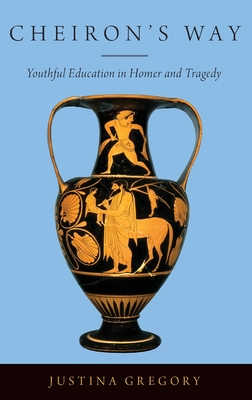
The book begins by exploring topics relevant to heroic and tragic education: age classes, rites of passage, verbal modes of instruction, social conditioning, mentoring, peer role models, and the controversial balance between nature and nurture. It introduces the first teacher in the Greek tradition, Cheiron the centaur, who founded a school for young heroes in his Thessalian cave and instructed Achilles, Jason, and others with mixed success. Next it turns to the Iliadic Achilles, who achieves maturity by way of successive crises-a crisis of disillusionment with the assumptions that shaped his heroic education, followed by a crisis of empathy for his adversary-and who becomes an influential prototype for tragedy. Examination of the Odyssey suggests that while Odysseus received a normative heroic upbringing and Nausicaa internalizes social expectations for young women, Telemachus is more of an outlier. In tragic representations of education Sophocles' Ajax and Neoptolemus replicate the Achillean pattern only partially and unsuccessfully, as does Euripides' Hippolytus; only Achilles and Iphigenia in Euripides' Iphigenia in Aulis achieve an emotional maturity commensurate with the Iliadic Achilles'. Yet all these texts confirm, as elegantly argued in this book, the perennial lure, despite uncertain results, of the educational enterprise for communities, students, and teachers.
Log in to write a review for this book.
No reviews yet. Be the first to share your opinion.
Biography not available.