TOIT, DU Author
Biography not available.

Browse all FOLKLORE books
Browse all GARDENS books
Browse all GRAPHIC NOVELS books
Browse all HISTORY - MEDIEVAL books
Browse all HUMOUR books
Browse all Juvenile Fiction : Biographical - Other books
Browse all Juvenile Fiction : Historical - Other books
Browse all Juvenile Fiction : Legends, Myths, & Fables - Other books
Browse all Juvenile Fiction : People & Places - Other books
Browse all Juvenile Fiction : People & Places - United States - Other books
Browse all Juvenile Fiction : Religious - Other books
Browse all Juvenile Nonfiction : History - Other books
Browse all Juvenile Nonfiction : Mathematics - Advanced books
Browse all Juvenile Nonfiction : People & Places - Other books
Browse all Juvenile Nonfiction : People & Places - United States - Othe books
Browse all LITERARY STUDIES books
Browse all LONDON books
Browse all Medical : Nursing - Mental Health books
Browse all MIND books
Browse all MUSEOLOGY books
Browse all NON-CLASSIFIABLE books
Browse all NONLINEAR SCIENCE books
Browse all POPULAR SCIENCE books
Browse all RELIGIOUS STUDIES books
Browse all SPIRIT books
Browse all SPORT books
Browse all TRAVEL WRITING books
 Out of Stock
Hardback · ISBN 9780190881856
Inclusive of GST and other taxes
Arriving at your doorstep in 10-15 days
Our logisitcs team will make sure everyitem is delivered safely
| ISBN | 9780190881856 |
|---|---|
| Publisher | Academic |
| Publication date | July 2015 |
| Language | English |
| MRP | £95.00 GBP |
| Page count | 306 |
| Item weight | 134 g |
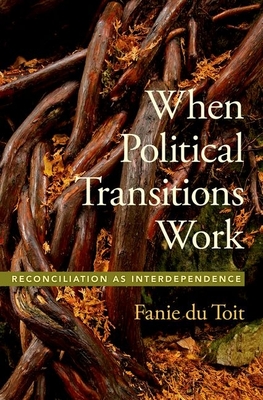
In When Political Transitions Work, Fanie du Toit, who has been a participant and close observer in post-conflict developments throughout Africa for decades, offers a new theory for why South Africa's reconciliation worked and why its lessons remain relevant for other nations emerging from civil conflicts. He uses reconciliation as a framework for political transition and seeks to answer three key questions: how do the reconciliation processes begin; how can political transitions result in inclusive and fair institutional change; and to what extent does reconciliation change the way a society functions? Looking at South Africa, one of reconciliation's most celebrated cases, du Toit shows that the key ingredient to successful reconciliations is acknowledging the centrality of relationships. He further develops his own theoretical approach to reconciliation-as-interdependence-the idea that reconciliation is the result of an integrated process of courageous leadership, fair and inclusive institutions, and social change built toward a mutual goal of prosperity.
As du Toit conveys, the motivation for reconciliation is the long-term well-being of one's own community, as well as that of enemy groups. Without ensuring the conditions in which one's enemy can flourish, one's own community is unlikely to prosper sustainably.
Log in to write a review for this book.
No reviews yet. Be the first to share your opinion.
Biography not available.