Giunti, Marco Author
Biography not available.

Browse all ART CRITICISM books
Browse all Ashworth books
Browse all FOLKLORE books
Browse all GARDENS books
Browse all GRAPHIC NOVELS books
Browse all Hamilton books
Browse all HISTORY - MEDIEVAL books
Browse all HUMOUR books
Browse all KINDRED books
Browse all LITERARY STUDIES books
Browse all LONDON books
Browse all Lozada books
Browse all Medical : Nursing - Mental Health books
Browse all MIND books
Browse all MUSEOLOGY books
Browse all NON-CLASSIFIABLE books
Browse all NONLINEAR SCIENCE books
Browse all Ormonde books
Browse all POPULAR SCIENCE books
Browse all RELIGIOUS STUDIES books
Browse all SPIRIT books
Browse all SPORT books
Browse all TRAVEL WRITING books
 Out of Stock
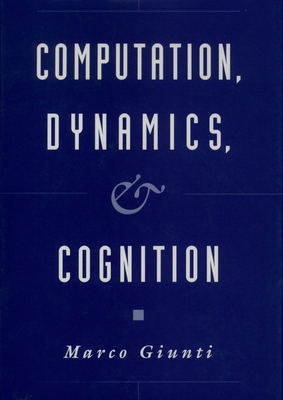
COMPUTATION DYNAMICS & COGNITI
Hardback · ISBN 9780195090093
Inclusive of GST and other taxes
Arriving at your doorstep in 10-15 days
Our logisitcs team will make sure everyitem is delivered safely
| ISBN | 9780195090093 |
|---|---|
| Subtitle | COMPUTATION DYNAMICS & COGNITI |
| Publisher | Oxford University Press |
| Publication date | March 2002 |
| Language | English |
| MRP | £107.50 GBP |
| Page count | 192 |
| Item weight | 100 g |
In chapter one Giunti employs a dynamical viewpoint to explore foundational issues in computation theory. Using the concept of Turing computability, he precisely and originally defines the nature of a computational system, sharpening our understanding of computation theory and its applications. In chapter two he generalizes his definition of a computational system, arguing that the concept of Turing computability itself is relative to the kind of support on which Turing machine operate. Chapter three completes the book's conceptual foundation, discussing a form of scientific explanation for real dynamical systems that Giunti calls "Galilean explanation."
The book's fourth and final chapter develops the methodological thesis that all cognitive systems are dynamical systems. On Giunti's view, a dynamical approach is likely to benefit even those scientific explanations of cognition which are based on symbolic models. Giunti concludes by proposing a new modeling practice for cognitive science, one based on "Galilean models" of cognitive systems.
Innovative, lucidly-written, and broad-ranging in its analysis, Computation, Dynamics, and Cognition will interest philosophers of science and mind, as well as cognitive scientists, computer scientists, and theorists of dynamical systems. This book elaborates a comprehensive picture of the application of dynamical methods to the study of cognition. Giunti argues that both computational systems and connectionist networks are special types of dynamical systems. He shows how this dynamical approach can be applied to problems of cognition, information processing, consciousness, meaning, and the relation between body and mind.
Log in to write a review for this book.
No reviews yet. Be the first to share your opinion.
Biography not available.