Oyserman, Daphna Author
Biography not available.

Browse all FOLKLORE books
Browse all GARDENS books
Browse all GRAPHIC NOVELS books
Browse all HISTORY - MEDIEVAL books
Browse all HUMOUR books
Browse all Juvenile Fiction : Biographical - Other books
Browse all Juvenile Fiction : Historical - Other books
Browse all Juvenile Fiction : Legends, Myths, & Fables - Other books
Browse all Juvenile Fiction : People & Places - Other books
Browse all Juvenile Fiction : People & Places - United States - Other books
Browse all Juvenile Fiction : Religious - Other books
Browse all Juvenile Nonfiction : History - Other books
Browse all Juvenile Nonfiction : Mathematics - Advanced books
Browse all Juvenile Nonfiction : People & Places - Other books
Browse all Juvenile Nonfiction : People & Places - United States - Othe books
Browse all LITERARY STUDIES books
Browse all LONDON books
Browse all Medical : Nursing - Mental Health books
Browse all MIND books
Browse all MUSEOLOGY books
Browse all NON-CLASSIFIABLE books
Browse all NONLINEAR SCIENCE books
Browse all POPULAR SCIENCE books
Browse all RELIGIOUS STUDIES books
Browse all SPIRIT books
Browse all SPORT books
Browse all TRAVEL WRITING books
 Out of Stock
PATHWAYS TO SUCCESS THROUGH ID
Paperback · ISBN 9780195341461
Inclusive of GST and other taxes
Arriving at your doorstep in 10-15 days
Our logisitcs team will make sure everyitem is delivered safely
| ISBN | 9780195341461 |
|---|---|
| Subtitle | PATHWAYS TO SUCCESS THROUGH ID |
| Publisher | OUP US |
| Publication date | March 2015 |
| Language | English |
| MRP | £69.00 GBP |
| Page count | 310 |
| Item weight | 160 g |
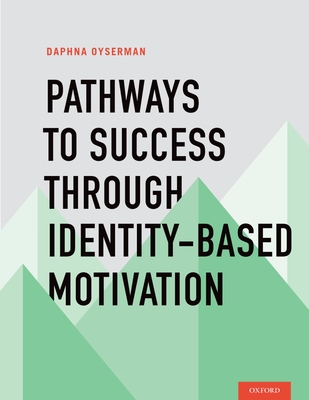
In Pathways to Success Through Identity-Based Motivation Daphna Oyserman focuses on situational constraints and affordances that trigger or impede taking action. Focusing on when the future-self matters and how to reduce the shortfall between the self that one aspires to become and the outcomes that one actually attains, Oyserman introduces the reader to the core theoretical framework of identity-based motivation (IBM) theory. IBM theory is the prediction that people prefer to act in identity-congruent ways but that the identity-to-behavior link is opaque for a number of reasons (the future feels far away, difficulty of working on goals is misinterpreted, and strategies for attaining goals do not feel identity-congruent). Oyserman's book goes on to also include the stakes and how the importance of education comes into play as it improves the lives of the individual, their family, and their society. The framework of IBM theory and how to achieve it is broken down into three parts: how to translate identity-based motivation into a practical intervention, an outline of the intervention, and empirical evidence that it works. In addition, the book also includes an implementation manual and fidelity measures for educators utilizing this book to intervene for the improvement of academic outcomes.
Log in to write a review for this book.
No reviews yet. Be the first to share your opinion.
Biography not available.