Lindquist, Stefanie A Author
Biography not available.

Browse all ART CRITICISM books
Browse all Ashworth books
Browse all FOLKLORE books
Browse all GARDENS books
Browse all GRAPHIC NOVELS books
Browse all Hamilton books
Browse all HISTORY - MEDIEVAL books
Browse all HUMOUR books
Browse all KINDRED books
Browse all LITERARY STUDIES books
Browse all LONDON books
Browse all Lozada books
Browse all Medical : Nursing - Mental Health books
Browse all MIND books
Browse all MUSEOLOGY books
Browse all NON-CLASSIFIABLE books
Browse all NONLINEAR SCIENCE books
Browse all Ormonde books
Browse all POPULAR SCIENCE books
Browse all RELIGIOUS STUDIES books
Browse all SPIRIT books
Browse all SPORT books
Browse all TRAVEL WRITING books
 Out of Stock
Hardback · ISBN 9780195370850
Inclusive of GST and other taxes
Arriving at your doorstep in 10-15 days
Our logisitcs team will make sure everyitem is delivered safely
| ISBN | 9780195370850 |
|---|---|
| Publisher | Oxford University Press |
| Publication date | April 2009 |
| Language | English |
| MRP | £98.00 GBP |
| Page count | 190 |
| Item weight | 104 g |
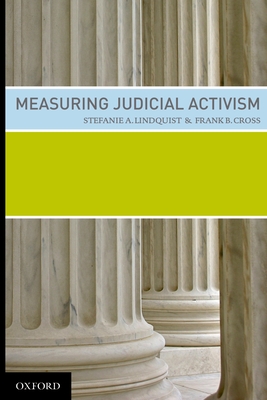
Stefanie Lindquist and Frank B. Cross's work is guided theoretically by the notion that, at its core, the concept of activism involves concerns over the judiciary's institutional aggrandizement at the expense of the elected branches. An important corollary idea is that such efforts are particularly "activist" when they further the justices' own policy or ideological objectives. From these core theoretical ideas, the authors identify specific empirical manifestations that reflect the expansion of judicial power. In particular, the authors evaluate the Court's exercise of judicial review to invalidate legislative and executive action. Lindquist and Cross also analyze the justices' willingness to expand the Court's power by granting litigants increased access to the courts and overruling the Court's own precedents. In these contexts, Measuring Judicial Activism considers the extent to which these actions are consistent with the justices' ideological predilections.
Log in to write a review for this book.
No reviews yet. Be the first to share your opinion.
Biography not available.
Biography not available.