Scerri, Eric Author
Biography not available.

Browse all FOLKLORE books
Browse all GARDENS books
Browse all GRAPHIC NOVELS books
Browse all HISTORY - MEDIEVAL books
Browse all HUMOUR books
Browse all Juvenile Fiction : Biographical - Other books
Browse all Juvenile Fiction : Historical - Other books
Browse all Juvenile Fiction : Legends, Myths, & Fables - Other books
Browse all Juvenile Fiction : People & Places - Other books
Browse all Juvenile Fiction : People & Places - United States - Other books
Browse all Juvenile Fiction : Religious - Other books
Browse all Juvenile Nonfiction : History - Other books
Browse all Juvenile Nonfiction : Mathematics - Advanced books
Browse all Juvenile Nonfiction : People & Places - Other books
Browse all Juvenile Nonfiction : People & Places - United States - Othe books
Browse all LITERARY STUDIES books
Browse all LONDON books
Browse all Medical : Nursing - Mental Health books
Browse all MIND books
Browse all MUSEOLOGY books
Browse all NON-CLASSIFIABLE books
Browse all NONLINEAR SCIENCE books
Browse all POPULAR SCIENCE books
Browse all RELIGIOUS STUDIES books
Browse all SPIRIT books
Browse all SPORT books
Browse all TRAVEL WRITING books
 Out of Stock
Hardback · ISBN 9780195391312
Inclusive of GST and other taxes
Arriving at your doorstep in 10-15 days
Our logisitcs team will make sure everyitem is delivered safely
| ISBN | 9780195391312 |
|---|---|
| Publisher | OXFORD UNIV PR |
| Publication date | June 2013 |
| Language | English |
| MRP | £29.99 GBP |
| Page count | 306 |
| Item weight | 111 g |
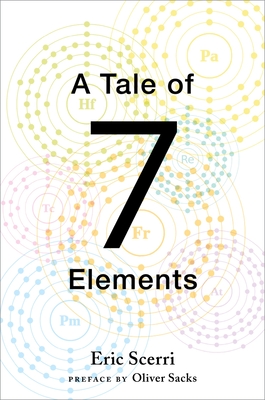
In his well researched and engaging narrative, Eric Scerri presents the intriguing stories of these seven elements--protactinium, hafnium, rhenium, technetium, francium, astatine and promethium. The book follows the historical order of discovery, roughly spanning the two world wars, beginning with the isolation of protactinium in 1917 and ending with that of promethium in 1945. For each element, Scerri traces the research that preceded the discovery, the pivotal experiments, the personalities of the chemists involved, the chemical nature of the new element, and its applications in science and technology. We learn for instance that alloys of hafnium--whose name derives from the Latin name for Copenhagen (hafnia)--have some of the highest boiling points on record and are used for the nozzles in rocket thrusters such as the Apollo Lunar Modules. Scerri also tells the personal tales of researchers overcoming great obstacles. We see how Lise Meitner and Otto Hahn--the pair who later proposed the theory of atomic fission--were struggling to isolate element 91 when World War I intervened, Hahn was drafted into the German army's poison gas unit, and Meitner was forced to press on alone against daunting odds. The book concludes by examining how and where the twenty-five new elements have taken their places in the periodic table in the last half century.
A Tale of Seven Elements paints a fascinating picture of chemical research--the wrong turns, missed opportunities, bitterly disputed claims, serendipitous findings, accusations of dishonesty--all leading finally to the thrill of discovery.
Log in to write a review for this book.
No reviews yet. Be the first to share your opinion.
Biography not available.