Cox, Simon, Author
Biography not available.

Browse all FOLKLORE books
Browse all GARDENS books
Browse all GRAPHIC NOVELS books
Browse all HISTORY - MEDIEVAL books
Browse all HUMOUR books
Browse all Juvenile Fiction : Biographical - Other books
Browse all Juvenile Fiction : Historical - Other books
Browse all Juvenile Fiction : Legends, Myths, & Fables - Other books
Browse all Juvenile Fiction : People & Places - Other books
Browse all Juvenile Fiction : People & Places - United States - Other books
Browse all Juvenile Fiction : Religious - Other books
Browse all Juvenile Nonfiction : History - Other books
Browse all Juvenile Nonfiction : Mathematics - Advanced books
Browse all Juvenile Nonfiction : People & Places - Other books
Browse all Juvenile Nonfiction : People & Places - United States - Othe books
Browse all LITERARY STUDIES books
Browse all LONDON books
Browse all Medical : Nursing - Mental Health books
Browse all MIND books
Browse all MUSEOLOGY books
Browse all NON-CLASSIFIABLE books
Browse all NONLINEAR SCIENCE books
Browse all POPULAR SCIENCE books
Browse all RELIGIOUS STUDIES books
Browse all SPIRIT books
Browse all SPORT books
Browse all TRAVEL WRITING books
 Out of Stock
Hardback · ISBN 9780197581032
Inclusive of GST and other taxes
Arriving at your doorstep in 10-15 days
Our logisitcs team will make sure everyitem is delivered safely
| ISBN | 9780197581032 |
|---|---|
| Publisher | Oxford University Press, USA |
| Publication date | December 2021 |
| Language | English |
| MRP | £93.00 GBP |
| Page count | 244 |
| Item weight | 115 g |
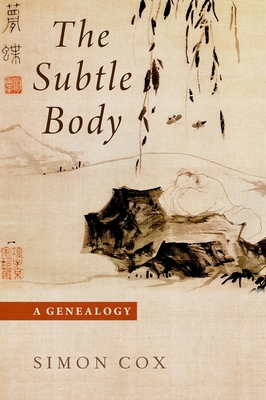
This study is an intellectual history of the subtle body concept from its origins in late antiquity through the Renaissance into the Euro-American counterculture of the 1960's and 70's. It begins with a prehistory of the idea, rooted as it is in third-century Neoplatonism. It then proceeds to the signifier "subtle body" in its earliest English uses amongst the Cambridge Platonists. After that, it looks forward to those Orientalist fathers of Indology, who, in their earliest translations of Sanskrit philosophy relied heavily on the Cambridge Platonist lexicon, and thereby brought Indian philosophy into what had hitherto been a distinctly platonic discourse. At this point, the story takes a little reflexive stroll into the source of the author's own interest in this strange concept, looking at Helena Blavatsky and the Theosophical import, expression, and popularization of the concept. Cox then zeroes in on Aleister Crowley, focusing on the subtle body in fin de siècle occultism. Finally, he turns to Carl Jung, his colleague Frederic Spiegelberg, and the popularization of the idea of the subtle body in the Euro-American counterculture. This book is for anyone interested in yogic, somatic, or energetic practices, and will be very useful to scholars and area specialists who rely on this term in dealing with Hindu, Daoist, and Buddhist texts.
Log in to write a review for this book.
No reviews yet. Be the first to share your opinion.
Biography not available.