SHTERNSHIS Author
Biography not available.

Browse all FOLKLORE books
Browse all GARDENS books
Browse all GRAPHIC NOVELS books
Browse all HISTORY - MEDIEVAL books
Browse all HUMOUR books
Browse all Juvenile Fiction : Biographical - Other books
Browse all Juvenile Fiction : Historical - Other books
Browse all Juvenile Fiction : Legends, Myths, & Fables - Other books
Browse all Juvenile Fiction : People & Places - Other books
Browse all Juvenile Fiction : People & Places - United States - Other books
Browse all Juvenile Fiction : Religious - Other books
Browse all Juvenile Nonfiction : History - Other books
Browse all Juvenile Nonfiction : Mathematics - Advanced books
Browse all Juvenile Nonfiction : People & Places - Other books
Browse all Juvenile Nonfiction : People & Places - United States - Othe books
Browse all LITERARY STUDIES books
Browse all LONDON books
Browse all Medical : Nursing - Mental Health books
Browse all MIND books
Browse all MUSEOLOGY books
Browse all NON-CLASSIFIABLE books
Browse all NONLINEAR SCIENCE books
Browse all POPULAR SCIENCE books
Browse all RELIGIOUS STUDIES books
Browse all SPIRIT books
Browse all SPORT books
Browse all TRAVEL WRITING books
 Out of Stock
Paperback · ISBN 9780197601082
Inclusive of GST and other taxes
Arriving at your doorstep in 10-15 days
Our logisitcs team will make sure everyitem is delivered safely
| ISBN | 9780197601082 |
|---|---|
| Publisher | Academic |
| Publication date | September 2021 |
| Language | English |
| MRP | £27.99 GBP |
| Page count | 260 |
| Item weight | 82 g |
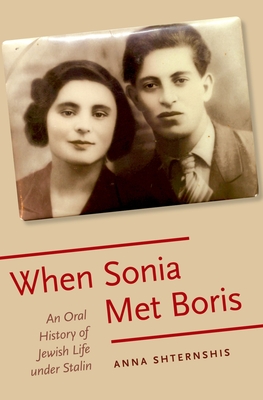
In pursuit of an answer, Anna Shternshis's groundbreaking When Sonia Met Boris: An Oral History of Jewish Life under Stalin draws on nearly 500 oral history interviews on the Soviet Jewish experience with Soviet citizens who were adults by the 1940s. Soviet Jews lived through tumultuous times: the Great Terror, World War II, the anti-Semitic policies of the postwar period, and the collapse of the Soviet Union. But, like millions of other Soviet citizens, they married, raised children, and built careers, pursuing life as best they could in a profoundly hostile environment. One of the first scholars to record and analyze oral testimonies of Soviet Jews, Shternshis unearths heartbreaking, deeply poignant, and often funny stories of the everyday choices Jews were forced to navigate as a repressed minority living in a totalitarian regime. Shternshis reveals how ethnicity rapidly transformed into a disability, as well as a negative characteristic, for Soviet Jews in the postwar period, and shows how it was something they needed desperately to overcome in order to succeed.
That sense of self has persisted well into the twenty-first century, and has impacted the Jewish identities of the children and grandchildren of Shternshis's subjects, the foundational generation of contemporary Russian Jewish culture. An illuminating work of social and cultural history, When Sonia Met Boris traces the fascinating contours of contemporary Russian Jewish identity back to their very roots.
Log in to write a review for this book.
No reviews yet. Be the first to share your opinion.
Biography not available.