Mathieu, Éric Editor
Biography not available.

Browse all FOLKLORE books
Browse all GARDENS books
Browse all GRAPHIC NOVELS books
Browse all HISTORY - MEDIEVAL books
Browse all HUMOUR books
Browse all Juvenile Fiction : Biographical - Other books
Browse all Juvenile Fiction : Historical - Other books
Browse all Juvenile Fiction : Legends, Myths, & Fables - Other books
Browse all Juvenile Fiction : People & Places - Other books
Browse all Juvenile Fiction : People & Places - United States - Other books
Browse all Juvenile Fiction : Religious - Other books
Browse all Juvenile Nonfiction : History - Other books
Browse all Juvenile Nonfiction : Mathematics - Advanced books
Browse all Juvenile Nonfiction : People & Places - Other books
Browse all Juvenile Nonfiction : People & Places - United States - Othe books
Browse all LITERARY STUDIES books
Browse all LONDON books
Browse all Medical : Nursing - Mental Health books
Browse all MIND books
Browse all MUSEOLOGY books
Browse all NON-CLASSIFIABLE books
Browse all NONLINEAR SCIENCE books
Browse all POPULAR SCIENCE books
Browse all RELIGIOUS STUDIES books
Browse all SPIRIT books
Browse all SPORT books
Browse all TRAVEL WRITING books
 Out of Stock
Hardback · ISBN 9780198828105
Inclusive of GST and other taxes
Arriving at your doorstep in 10-15 days
Our logisitcs team will make sure everyitem is delivered safely
| ISBN | 9780198828105 |
|---|---|
| Publisher | OXFORD UNIV PR |
| Publication date | January 2019 |
| Language | English |
| MRP | £117.50 GBP |
| Page count | 336 |
| Item weight | 143 g |
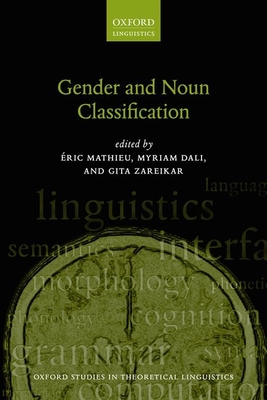
The book's contributors draw on data from a wide range of languages, including Amharic, French, Gitksan, Haro, Lithuanian, Japanese, Mi'kmaw, Persian, and Shona. Chapters examine where in the nominal structure gender is able to function as a classifying device, and how in the absence of gender, other functional elements in the nominal spine come to fill that gap. Other chapters focus on how gender participates in grammatical concord and agreement phenomena. The volume also discusses semantic agreement: hybrid agreement sometimes arises due to a distinction that grammars encode between natural gender on the one hand and grammatical gender on the other. The findings in the volume have significant implications for syntactic theory and theories of interpretation, and contribute to a greater understanding of the interplay between inflection and derivation. The volume will be of interest to theoretical linguists and typologists from advanced undergraduate level upwards.
Log in to write a review for this book.
No reviews yet. Be the first to share your opinion.
Biography not available.
Biography not available.
Biography not available.