Stone Sweet, Alec Author
Biography not available.

Browse all FOLKLORE books
Browse all GARDENS books
Browse all GRAPHIC NOVELS books
Browse all HISTORY - MEDIEVAL books
Browse all HUMOUR books
Browse all Juvenile Fiction : Biographical - Other books
Browse all Juvenile Fiction : Historical - Other books
Browse all Juvenile Fiction : Legends, Myths, & Fables - Other books
Browse all Juvenile Fiction : People & Places - Other books
Browse all Juvenile Fiction : People & Places - United States - Other books
Browse all Juvenile Fiction : Religious - Other books
Browse all Juvenile Nonfiction : History - Other books
Browse all Juvenile Nonfiction : Mathematics - Advanced books
Browse all Juvenile Nonfiction : People & Places - Other books
Browse all Juvenile Nonfiction : People & Places - United States - Othe books
Browse all LITERARY STUDIES books
Browse all LONDON books
Browse all Medical : Nursing - Mental Health books
Browse all MIND books
Browse all MUSEOLOGY books
Browse all NON-CLASSIFIABLE books
Browse all NONLINEAR SCIENCE books
Browse all POPULAR SCIENCE books
Browse all RELIGIOUS STUDIES books
Browse all SPIRIT books
Browse all SPORT books
Browse all TRAVEL WRITING books
 Out of Stock
Hardback · ISBN 9780198841395
Inclusive of GST and other taxes
Arriving at your doorstep in 10-15 days
Our logisitcs team will make sure everyitem is delivered safely
| ISBN | 9780198841395 |
|---|---|
| Publisher | OXFORD UNIV PR |
| Publication date | July 2019 |
| Language | English |
| MRP | £122.50 GBP |
| Page count | 250 |
| Item weight | 117 g |
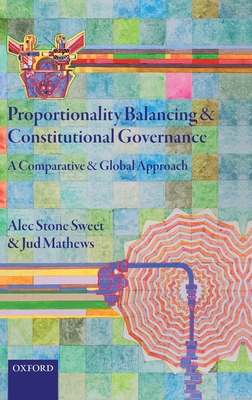
In this book, Alec Stone Sweet and Jud Mathews focus on the law and politics of rights protection in democracies, and in human rights regimes in Europe, the Americas, and Africa. After introducing the basic features of modern constitutions, with their emphasis on rights and judicial review, the authors present a theory of proportionality that explains why constitutional judges embraced it. Proportionality analysis is a highly intrusive mode of judicial supervision: it permits state officials to limit rights, but only when necessary to achieve a sufficiently important public interest. Since the 1950s, virtually every powerful domestic and international court has adopted proportionality analysis as the central method for protecting rights. In doing so, judges positioned themselves to review all important legislative and administrative decisions, and to invalidate them as unconstitutional when such policies fail the proportionality test. The result has been a massive - and global - transformation of law and politics. The book explicates the concepts of 'trusteeship', the 'system of constitutional justice', the 'effectiveness' of rights adjudication, and the 'zone of proportionality'. A wide range of case studies analyse: how proportionality has spread, and variation in how it is deployed; the extent to which the U.S. Supreme Court has evolved and resisted similar doctrines; the role of proportionality in building ongoing 'constitutional dialogues' with the other branches of government; and the importance of the principle to the courts of regional human rights regimes. While there is variance in the intensity of proportionality-based dialogues, such interactions are today at the very heart of governance in the modern constitutional state and beyond.
Log in to write a review for this book.
No reviews yet. Be the first to share your opinion.
Biography not available.
Biography not available.