Stokes Author
Biography not available.

Browse all ART CRITICISM books
Browse all Ashworth books
Browse all FOLKLORE books
Browse all GARDENS books
Browse all GRAPHIC NOVELS books
Browse all Hamilton books
Browse all HISTORY - MEDIEVAL books
Browse all HUMOUR books
Browse all Juvenile Fiction : Biographical - Other books
Browse all Juvenile Fiction : Historical - Other books
Browse all Juvenile Fiction : Legends, Myths, & Fables - Other books
Browse all Juvenile Fiction : People & Places - Other books
Browse all Juvenile Fiction : People & Places - United States - Other books
Browse all Juvenile Fiction : Religious - Other books
Browse all Juvenile Nonfiction : History - Other books
Browse all Juvenile Nonfiction : Mathematics - Advanced books
Browse all Juvenile Nonfiction : People & Places - Other books
Browse all Juvenile Nonfiction : People & Places - United States - Othe books
Browse all KINDRED books
Browse all LITERARY STUDIES books
Browse all LONDON books
Browse all Lozada books
Browse all Medical : Nursing - Mental Health books
Browse all MIND books
Browse all MUSEOLOGY books
Browse all NON-CLASSIFIABLE books
Browse all NONLINEAR SCIENCE books
Browse all Ormonde books
Browse all POPULAR SCIENCE books
Browse all RELIGIOUS STUDIES books
Browse all SPIRIT books
Browse all SPORT books
Browse all TRAVEL WRITING books
 Out of Stock
Hardback · ISBN 9780198857808
Inclusive of GST and other taxes
Arriving at your doorstep in 10-15 days
Our logisitcs team will make sure everyitem is delivered safely
| ISBN | 9780198857808 |
|---|---|
| Publisher | Academic |
| Publication date | January 2021 |
| Language | English |
| MRP | £110.00 GBP |
| Page count | 256 |
| Item weight | 98 g |
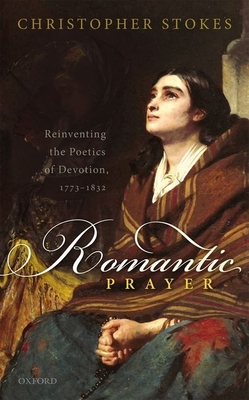
After laying out the details of prayer's historical position in the Romantic era across a spread of religious traditions, Romantic Prayer turns to a range of writers, from the identifiably religious to the staunchly sceptical. William Cowper and Anna Letitia Barbauld are shown to use poetry to reflect and reinvent the ideals of prayer inherited from their own denominational histories. Samuel Taylor Coleridge's work is analysed as part of a long engagement with the rationality of prayer, culminating in an explicit 'philosophy' of prayer; William Wordsworth--by contrast--keeps prayer at an aesthetic distance, continually alluding to prayerful language but rarely committing to devotional voice itself. John Keats, Percy Bysshe Shelley, and Lord Byron are treated in the context of departing from Christianity, under the influence of Enlightenment, materialist, and atheist critiques--what happens to prayer in poetry when prayer as a language traditionally conceived is becoming impossible to maintain?
Log in to write a review for this book.
No reviews yet. Be the first to share your opinion.
Biography not available.