Williamson, Jon Author
Biography not available.

Browse all FOLKLORE books
Browse all GARDENS books
Browse all GRAPHIC NOVELS books
Browse all HISTORY - MEDIEVAL books
Browse all HUMOUR books
Browse all Juvenile Fiction : Biographical - Other books
Browse all Juvenile Fiction : Historical - Other books
Browse all Juvenile Fiction : Legends, Myths, & Fables - Other books
Browse all Juvenile Fiction : People & Places - Other books
Browse all Juvenile Fiction : People & Places - United States - Other books
Browse all Juvenile Fiction : Religious - Other books
Browse all Juvenile Nonfiction : History - Other books
Browse all Juvenile Nonfiction : Mathematics - Advanced books
Browse all Juvenile Nonfiction : People & Places - Other books
Browse all Juvenile Nonfiction : People & Places - United States - Othe books
Browse all LITERARY STUDIES books
Browse all LONDON books
Browse all Medical : Nursing - Mental Health books
Browse all MIND books
Browse all MUSEOLOGY books
Browse all NON-CLASSIFIABLE books
Browse all NONLINEAR SCIENCE books
Browse all POPULAR SCIENCE books
Browse all RELIGIOUS STUDIES books
Browse all SPIRIT books
Browse all SPORT books
Browse all TRAVEL WRITING books
 Out of Stock
Hardback · ISBN 9780199228003
Inclusive of GST and other taxes
Arriving at your doorstep in 10-15 days
Our logisitcs team will make sure everyitem is delivered safely
| ISBN | 9780199228003 |
|---|---|
| Publisher | OUP Oxford |
| Publication date | July 2010 |
| Language | English |
| MRP | £107.50 GBP |
| Page count | 192 |
| Item weight | 99 g |
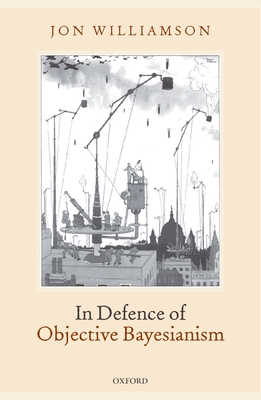
That is the key question facing Bayesian epistemology. Subjective Bayesians hold that it is largely (though not entirely) up to the agent as to which degrees of belief to adopt. Objective Bayesians, on the other hand, maintain that appropriate degrees of belief are largely (though not entirely) determined by the agent's evidence. This book states and defends a version of objective Bayesian epistemology. According to this version, objective Bayesianism is characterized by three norms:
DT Probability - degrees of belief should be probabilities
DT Calibration - they should be calibrated with evidence
DT Equivocation - they should otherwise equivocate between basic outcomes
Objective Bayesianism has been challenged on a number of different fronts. For example, some claim it is poorly motivated, or fails to handle qualitative evidence, or yields counter-intuitive degrees of belief after updating, or suffers from a failure to learn from experience. It has also been accused of being computationally intractable, susceptible to paradox, language dependent, and of not being objective enough.
Especially suitable for graduates or researchers in philosophy of science, foundations of statistics and artificial intelligence, the book argues that these criticisms can be met and that objective Bayesianism is a promising theory with an exciting agenda for further research.
Log in to write a review for this book.
No reviews yet. Be the first to share your opinion.
Biography not available.