Bygrave, Lee A. Editor
Biography not available.

Browse all FOLKLORE books
Browse all GARDENS books
Browse all GRAPHIC NOVELS books
Browse all HISTORY - MEDIEVAL books
Browse all HUMOUR books
Browse all Juvenile Fiction : Biographical - Other books
Browse all Juvenile Fiction : Historical - Other books
Browse all Juvenile Fiction : Legends, Myths, & Fables - Other books
Browse all Juvenile Fiction : People & Places - Other books
Browse all Juvenile Fiction : People & Places - United States - Other books
Browse all Juvenile Fiction : Religious - Other books
Browse all Juvenile Nonfiction : History - Other books
Browse all Juvenile Nonfiction : Mathematics - Advanced books
Browse all Juvenile Nonfiction : People & Places - Other books
Browse all Juvenile Nonfiction : People & Places - United States - Othe books
Browse all LITERARY STUDIES books
Browse all LONDON books
Browse all Medical : Nursing - Mental Health books
Browse all MIND books
Browse all MUSEOLOGY books
Browse all NON-CLASSIFIABLE books
Browse all NONLINEAR SCIENCE books
Browse all POPULAR SCIENCE books
Browse all RELIGIOUS STUDIES books
Browse all SPIRIT books
Browse all SPORT books
Browse all TRAVEL WRITING books
 Out of Stock
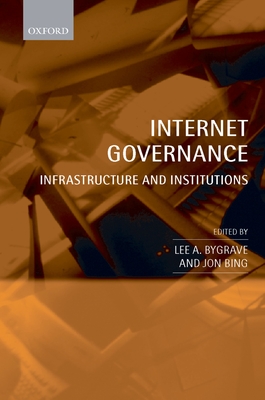
INTERNET GOVERNANCE
Hardback · ISBN 9780199561131
Inclusive of GST and other taxes
Arriving at your doorstep in 10-15 days
Our logisitcs team will make sure everyitem is delivered safely
| ISBN | 9780199561131 |
|---|---|
| Subtitle | INTERNET GOVERNANCE |
| Publisher | OUP Oxford |
| Publication date | March 2009 |
| Language | English |
| MRP | £125.00 GBP |
| Page count | 262 |
| Item weight | 120 g |
This book focuses on the issues involved in the ongoing development of Internet governance, and the challenges associated with developing and applying governance structures at a global level based on bottom-up, consensus-seeking decision-making procedures, without direct foundation in a treaty frame-work. Leading academics and practitioners studying and working in the area of Internet governance explore such issues as how the engineering of infrastructure matters, how legitimacy is gained and retained by governance organizations, and whether elements of such organizations can provide a model for other organizations to emulate. They examine the tensions inherent in Internet governance, such as government control versus digital libertarianism; commercialism versus civil society ideals; interests of developed countries versus interests of developing countries.
The book will be of interest to academics, researchers, and students of Information and Communications Technology, legal aspects of ICT, and Organization Studies, as well as legal practitioners, government bodies, NGOs, and others concerned with Internet governance.
Log in to write a review for this book.
No reviews yet. Be the first to share your opinion.
Biography not available.
Biography not available.