Marshall, Alan Author
Biography not available.

Browse all FOLKLORE books
Browse all GARDENS books
Browse all GRAPHIC NOVELS books
Browse all HISTORY - MEDIEVAL books
Browse all HUMOUR books
Browse all Juvenile Fiction : Biographical - Other books
Browse all Juvenile Fiction : Historical - Other books
Browse all Juvenile Fiction : Legends, Myths, & Fables - Other books
Browse all Juvenile Fiction : People & Places - Other books
Browse all Juvenile Fiction : People & Places - United States - Other books
Browse all Juvenile Fiction : Religious - Other books
Browse all Juvenile Nonfiction : History - Other books
Browse all Juvenile Nonfiction : Mathematics - Advanced books
Browse all Juvenile Nonfiction : People & Places - Other books
Browse all Juvenile Nonfiction : People & Places - United States - Othe books
Browse all LITERARY STUDIES books
Browse all LONDON books
Browse all Medical : Nursing - Mental Health books
Browse all MIND books
Browse all MUSEOLOGY books
Browse all NON-CLASSIFIABLE books
Browse all NONLINEAR SCIENCE books
Browse all POPULAR SCIENCE books
Browse all RELIGIOUS STUDIES books
Browse all SPIRIT books
Browse all SPORT books
Browse all TRAVEL WRITING books
 Out of Stock
AMER EXPERIMENTAL POETRY & DEM
Hardback · ISBN 9780199561926
Inclusive of GST and other taxes
Arriving at your doorstep in 10-15 days
Our logisitcs team will make sure everyitem is delivered safely
| ISBN | 9780199561926 |
|---|---|
| Subtitle | AMER EXPERIMENTAL POETRY & DEM |
| Publisher | OUP Oxford |
| Publication date | November 2009 |
| Language | English |
| MRP | £145.00 GBP |
| Page count | 328 |
| Item weight | 140 g |
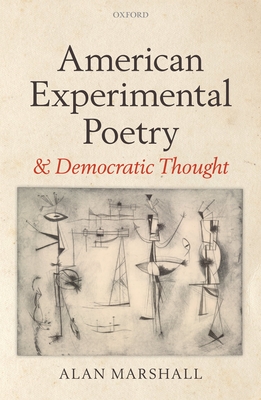
American Poetry and Democratic Thought argues against the narrowly ideological interpretation of politics that dominates contemporary literary studies, an attitude that can be traced back to the legacies of Marx and Freud, and conceives of ideology in deterministic terms as unconscious political alignment. To that extent it echoes Tocqueville's concern, in his great work, to underline the differences between his own methods and perspectives and the historical determinism of his contemporaries. The book draws upon a wide range of thinkers, including Madison, Tocqueville, Kant, Marx, Freud, Heidegger, Adorno, Riesman, Arendt, Benhabib, and Cavell, as it seeks to expand and develop Tocqueville's circumspect humanist critical trajectory. The chapters are conceived as a series of innovative dialogical constellations, to which the close reading of poetry is central. The aim throughout is to measure the thought of the poets or their poems against the thoughts of those who are more often called thinkers.
Log in to write a review for this book.
No reviews yet. Be the first to share your opinion.
Biography not available.