Pásztor, Liz Author
Biography not available.

Browse all ART CRITICISM books
Browse all Ashworth books
Browse all FOLKLORE books
Browse all GARDENS books
Browse all GRAPHIC NOVELS books
Browse all Hamilton books
Browse all HISTORY - MEDIEVAL books
Browse all HUMOUR books
Browse all Juvenile Fiction : Biographical - Other books
Browse all Juvenile Fiction : Historical - Other books
Browse all Juvenile Fiction : Legends, Myths, & Fables - Other books
Browse all Juvenile Fiction : People & Places - Other books
Browse all Juvenile Fiction : People & Places - United States - Other books
Browse all Juvenile Fiction : Religious - Other books
Browse all Juvenile Nonfiction : History - Other books
Browse all Juvenile Nonfiction : Mathematics - Advanced books
Browse all Juvenile Nonfiction : People & Places - Other books
Browse all Juvenile Nonfiction : People & Places - United States - Othe books
Browse all KINDRED books
Browse all LITERARY STUDIES books
Browse all LONDON books
Browse all Lozada books
Browse all Medical : Nursing - Mental Health books
Browse all MIND books
Browse all MUSEOLOGY books
Browse all NON-CLASSIFIABLE books
Browse all NONLINEAR SCIENCE books
Browse all Ormonde books
Browse all POPULAR SCIENCE books
Browse all RELIGIOUS STUDIES books
Browse all SPIRIT books
Browse all SPORT books
Browse all TRAVEL WRITING books
 Out of Stock
Hardback · ISBN 9780199577859
Inclusive of GST and other taxes
Arriving at your doorstep in 10-15 days
Our logisitcs team will make sure everyitem is delivered safely
| ISBN | 9780199577859 |
|---|---|
| Publisher | Oxford University Press (UK) |
| Publication date | December 2015 |
| Language | English |
| MRP | £127.50 GBP |
| Page count | 324 |
| Item weight | 229 g |
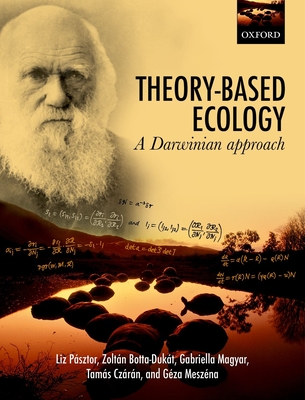
The authors base their synthetic theory of Darwinian ecology on seven key principles: exponential growth, growth regulation, inherited individual differences, finiteness and stochasticity, competitive exclusion, robust coexistence, and constraints and trade-offs. Within this solid conceptual framework, they integrate classic and actual empirical knowledge from ecology and evolutionary biology, clarifying methodological and mathematical detail in clear and helpful text boxes. A wealth of illustrated examples pertaining to different organisational levels (alleles, clones and species) helps to explain how the principles operate.
This is an invaluable resource for graduate level students as well as professional researchers in the fields of ecology, genetics, evolutionary ecology, and mathematical biology.
Log in to write a review for this book.
No reviews yet. Be the first to share your opinion.
Biography not available.