Bevir, Mark Author
Biography not available.

Browse all FOLKLORE books
Browse all GARDENS books
Browse all GRAPHIC NOVELS books
Browse all HISTORY - MEDIEVAL books
Browse all HUMOUR books
Browse all Juvenile Fiction : Biographical - Other books
Browse all Juvenile Fiction : Historical - Other books
Browse all Juvenile Fiction : Legends, Myths, & Fables - Other books
Browse all Juvenile Fiction : People & Places - Other books
Browse all Juvenile Fiction : People & Places - United States - Other books
Browse all Juvenile Fiction : Religious - Other books
Browse all Juvenile Nonfiction : History - Other books
Browse all Juvenile Nonfiction : Mathematics - Advanced books
Browse all Juvenile Nonfiction : People & Places - Other books
Browse all Juvenile Nonfiction : People & Places - United States - Othe books
Browse all LITERARY STUDIES books
Browse all LONDON books
Browse all Medical : Nursing - Mental Health books
Browse all MIND books
Browse all MUSEOLOGY books
Browse all NON-CLASSIFIABLE books
Browse all NONLINEAR SCIENCE books
Browse all POPULAR SCIENCE books
Browse all RELIGIOUS STUDIES books
Browse all SPIRIT books
Browse all SPORT books
Browse all TRAVEL WRITING books
 Out of Stock
STATE AS CULTURAL PRAC
Hardback · ISBN 9780199580750
Inclusive of GST and other taxes
Arriving at your doorstep in 10-15 days
Our logisitcs team will make sure everyitem is delivered safely
| ISBN | 9780199580750 |
|---|---|
| Subtitle | STATE AS CULTURAL PRAC |
| Publisher | OUP Oxford |
| Publication date | April 2010 |
| Language | English |
| MRP | £152.50 GBP |
| Page count | 260 |
| Item weight | 120 g |
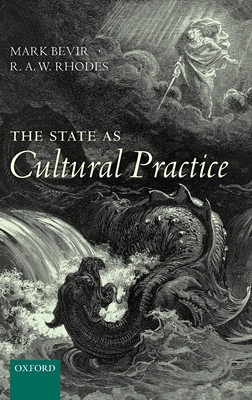
Bevir and Rhodes argue for the idea of 'the stateless state' or the state as meaning-in-action. So, the state is neither monolithic nor a causal agent. It consists solely of the contingent actions of specific individuals; of diverse beliefs about the public sphere, about authority and power, which are constructed differently in contending traditions. Continuity and change are products of people inheriting traditions and modifying them in response to dilemmas. A decentred approach explores the limits to the state and seeks to develop a more diverse view of state authority and its exercise. In short, political scientists need to bring people back in to the study of the state.
Log in to write a review for this book.
No reviews yet. Be the first to share your opinion.
Biography not available.
Biography not available.