Rao, Rahul Author
Biography not available.

Browse all ART CRITICISM books
Browse all Ashworth books
Browse all FOLKLORE books
Browse all GARDENS books
Browse all GRAPHIC NOVELS books
Browse all Hamilton books
Browse all HISTORY - MEDIEVAL books
Browse all HUMOUR books
Browse all KINDRED books
Browse all LITERARY STUDIES books
Browse all LONDON books
Browse all Lozada books
Browse all Medical : Nursing - Mental Health books
Browse all MIND books
Browse all MUSEOLOGY books
Browse all NON-CLASSIFIABLE books
Browse all NONLINEAR SCIENCE books
Browse all Ormonde books
Browse all POPULAR SCIENCE books
Browse all RELIGIOUS STUDIES books
Browse all SPIRIT books
Browse all SPORT books
Browse all TRAVEL WRITING books
 Out of Stock
Paperback · ISBN 9780199650545
Inclusive of GST and other taxes
Arriving at your doorstep in 10-15 days
Our logisitcs team will make sure everyitem is delivered safely
| ISBN | 9780199650545 |
|---|---|
| Publisher | Oxford University Press(UK) |
| Publication date | June 2012 |
| Language | English |
| MRP | £54.00 GBP |
| Page count | 288 |
| Item weight | 90 g |
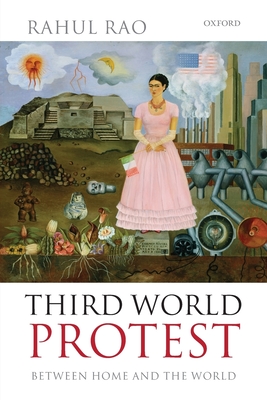
If boundaries protect us from threats, how should we think about the boundaries of states in a world where threats to human rights emanate from both outside the state and the state itself? Arguing that attitudes towards boundaries are premised on assumptions about the locus of threats to vital interests, Rahul Rao digs beneath two major normative orientations towards boundaries-cosmopolitanism and nationalism-which structure thinking on questions of public policy and identity. Insofar as the Third World is concerned, hegemonic versions of both orientations are underpinned by simplistic imageries of threat. In the cosmopolitan gaze, political and economic crises in the Third World are attributed mainly to factors internal to the Third World state with the international playing the role of heroic saviour. In Third World nationalist imagery, the international is portrayed as a realm of neo-imperialist predation from which the domestic has to be secured. Both images capture widely held intuitions about the sources of threats to human rights, but each by itself provides a resolutely partial inventory of these threats. By juxtaposing critical accounts of both discourses, Rao argues that protest sensibilities in the current conjuncture must be critical of hegemonic variants of both cosmopolitanism and nationalism. The second half of the book illustrates what such a critique might look like. Journeying through the writings of James Joyce, Rabindranath Tagore, Edward Said and Frantz Fanon, the activism of 'anti-globalisation' protesters, and the dilemmas of queer rights activists, Rao demonstrates that important currents of Third World protest have long battled against both the international and the domestic, in a manner that combines nationalist and cosmopolitan sensibilities.
Log in to write a review for this book.
No reviews yet. Be the first to share your opinion.
Biography not available.