Grant, James Author
Biography not available.

Browse all FOLKLORE books
Browse all GARDENS books
Browse all GRAPHIC NOVELS books
Browse all HISTORY - MEDIEVAL books
Browse all HUMOUR books
Browse all Juvenile Fiction : Biographical - Other books
Browse all Juvenile Fiction : Historical - Other books
Browse all Juvenile Fiction : Legends, Myths, & Fables - Other books
Browse all Juvenile Fiction : People & Places - Other books
Browse all Juvenile Fiction : People & Places - United States - Other books
Browse all Juvenile Fiction : Religious - Other books
Browse all Juvenile Nonfiction : History - Other books
Browse all Juvenile Nonfiction : Mathematics - Advanced books
Browse all Juvenile Nonfiction : People & Places - Other books
Browse all Juvenile Nonfiction : People & Places - United States - Othe books
Browse all LITERARY STUDIES books
Browse all LONDON books
Browse all Medical : Nursing - Mental Health books
Browse all MIND books
Browse all MUSEOLOGY books
Browse all NON-CLASSIFIABLE books
Browse all NONLINEAR SCIENCE books
Browse all POPULAR SCIENCE books
Browse all RELIGIOUS STUDIES books
Browse all SPIRIT books
Browse all SPORT books
Browse all TRAVEL WRITING books
 Out of Stock
Hardback · ISBN 9780199661794
Inclusive of GST and other taxes
Arriving at your doorstep in 10-15 days
Our logisitcs team will make sure everyitem is delivered safely
| ISBN | 9780199661794 |
|---|---|
| Publisher | OUP UK |
| Publication date | May 2013 |
| Language | English |
| MRP | £75.00 GBP |
| Page count | 206 |
| Item weight | 91 g |
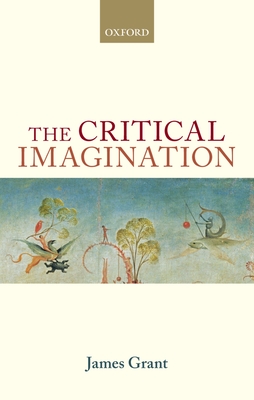
The first half explains the role imaginativeness plays in criticism. To do this, Grant answers three questions that are of interest in their own right. First, what are the aims of criticism? Is the point of criticizing a work to evaluate it, to explain it, to modify our response to it, or something else? Second, what is it to appreciate art? Third, what is imaginativeness? He gives new answers to all three questions, and uses them to explain the role of imaginativeness in criticism.
The book's second half focuses on metaphor. Why are some metaphors so effective? How do we understand metaphors? Are some thoughts expressible only in metaphor? Grant's answers to these questions go against much current thinking in the philosophy of language. He uses these answers to explain why imaginative metaphors are so common in art criticism. The result is a rigorous and original theory of metaphor, criticism, imaginativeness, and their interrelations.
Log in to write a review for this book.
No reviews yet. Be the first to share your opinion.
Biography not available.