Ladd, D Robert Author
Biography not available.

Browse all ART CRITICISM books
Browse all Ashworth books
Browse all FOLKLORE books
Browse all GARDENS books
Browse all GRAPHIC NOVELS books
Browse all Hamilton books
Browse all HISTORY - MEDIEVAL books
Browse all HUMOUR books
Browse all KINDRED books
Browse all LITERARY STUDIES books
Browse all LONDON books
Browse all Lozada books
Browse all Medical : Nursing - Mental Health books
Browse all MIND books
Browse all MUSEOLOGY books
Browse all NON-CLASSIFIABLE books
Browse all NONLINEAR SCIENCE books
Browse all Ormonde books
Browse all POPULAR SCIENCE books
Browse all RELIGIOUS STUDIES books
Browse all SPIRIT books
Browse all SPORT books
Browse all TRAVEL WRITING books
 Out of Stock
Hardback · ISBN 9780199670970
Inclusive of GST and other taxes
Arriving at your doorstep in 10-15 days
Our logisitcs team will make sure everyitem is delivered safely
| ISBN | 9780199670970 |
|---|---|
| Publisher | OUP Oxford |
| Publication date | April 2014 |
| Language | English |
| MRP | £122.50 GBP |
| Page count | 200 |
| Item weight | 101 g |
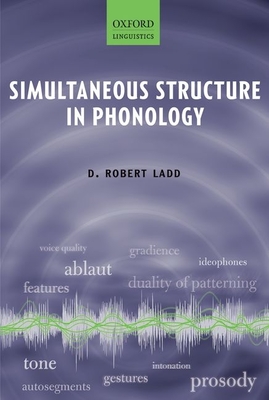
The five main chapters cover distinctive features and autosegments, systematic phonetics, the definition of 'prosody', aspects of vocal paralinguistic communication and 'gradience', and duality of patterning. Each chapter reviews a wide range of relevant literature, generally going back to the beginnings of modern linguistics in the early twentieth century, and all of them can usefully be read as free-standing synthetic overviews of the issues they discuss. The final chapter suggests that phonological structure, sequential or otherwise, can be seen as a special case of the segmentation of continuous action into discrete events, and that research on this general topic within cognitive psychology is relevant to phonological theory.
Professor Ladd's unique work makes a fundamental contribution to phonology and phonetics and to linguistic theory more generally. His book will interest all theoretical linguists and cognitive scientists concerned with understanding the relation between phonological representations and the speech signal.
Log in to write a review for this book.
No reviews yet. Be the first to share your opinion.
Biography not available.