Draheim, Megan Editor
Biography not available.

Browse all FOLKLORE books
Browse all GARDENS books
Browse all GRAPHIC NOVELS books
Browse all HISTORY - MEDIEVAL books
Browse all HUMOUR books
Browse all Juvenile Fiction : Biographical - Other books
Browse all Juvenile Fiction : Historical - Other books
Browse all Juvenile Fiction : Legends, Myths, & Fables - Other books
Browse all Juvenile Fiction : People & Places - Other books
Browse all Juvenile Fiction : People & Places - United States - Other books
Browse all Juvenile Fiction : Religious - Other books
Browse all Juvenile Nonfiction : History - Other books
Browse all Juvenile Nonfiction : Mathematics - Advanced books
Browse all Juvenile Nonfiction : People & Places - Other books
Browse all Juvenile Nonfiction : People & Places - United States - Othe books
Browse all LITERARY STUDIES books
Browse all LONDON books
Browse all Medical : Nursing - Mental Health books
Browse all MIND books
Browse all MUSEOLOGY books
Browse all NON-CLASSIFIABLE books
Browse all NONLINEAR SCIENCE books
Browse all POPULAR SCIENCE books
Browse all RELIGIOUS STUDIES books
Browse all SPIRIT books
Browse all SPORT books
Browse all TRAVEL WRITING books
 Out of Stock
Hardback · ISBN 9780199687145
Inclusive of GST and other taxes
Arriving at your doorstep in 10-15 days
Our logisitcs team will make sure everyitem is delivered safely
| ISBN | 9780199687145 |
|---|---|
| Publisher | Oxford University Press (UK) |
| Publication date | September 2016 |
| Language | English |
| MRP | £152.50 GBP |
| Page count | 218 |
| Item weight | 132 g |
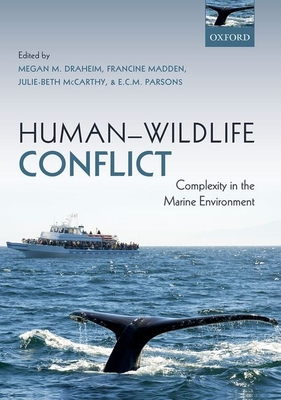
Through a series of case studies, the book's authors and editors tackle a wide variety of subjects relating to conflict, from the challenges of wicked problems and common pool resources, to the roles that storytelling and religion can play in conflict. Throughout the book, the authors work with a Conservation Conflict Transformation (CCT) approach, adapted from the peacebuilding field to address the reality of conservation today. The authors utilise one of CCT's key analytic components, the Levels of Conflict model, as a tool to provide insight into their case studies. Although the examples discussed are from the world of marine conservation, the lessons they provide are applicable to a wide variety of global conservation issues, including those in the terrestrial realm.
Human-Wildlife Conflict will be essential reading for graduate students and established researchers in the field of marine conservation biology. It will also be a valuable reference for a global audience of conservation practitioners, wildlife managers, and other conservation professionals.
Log in to write a review for this book.
No reviews yet. Be the first to share your opinion.
Biography not available.