Cohen, Emma Author
Biography not available.

Browse all ART CRITICISM books
Browse all Ashworth books
Browse all FOLKLORE books
Browse all GARDENS books
Browse all GRAPHIC NOVELS books
Browse all Hamilton books
Browse all HISTORY - MEDIEVAL books
Browse all HUMOUR books
Browse all Juvenile Fiction : Biographical - Other books
Browse all Juvenile Fiction : Historical - Other books
Browse all Juvenile Fiction : Legends, Myths, & Fables - Other books
Browse all Juvenile Fiction : People & Places - Other books
Browse all Juvenile Fiction : People & Places - United States - Other books
Browse all Juvenile Fiction : Religious - Other books
Browse all Juvenile Nonfiction : History - Other books
Browse all Juvenile Nonfiction : Mathematics - Advanced books
Browse all Juvenile Nonfiction : People & Places - Other books
Browse all Juvenile Nonfiction : People & Places - United States - Othe books
Browse all KINDRED books
Browse all LITERARY STUDIES books
Browse all LONDON books
Browse all Lozada books
Browse all Medical : Nursing - Mental Health books
Browse all MIND books
Browse all MUSEOLOGY books
Browse all NON-CLASSIFIABLE books
Browse all NONLINEAR SCIENCE books
Browse all Ormonde books
Browse all POPULAR SCIENCE books
Browse all RELIGIOUS STUDIES books
Browse all SPIRIT books
Browse all SPORT books
Browse all TRAVEL WRITING books
 Out of Stock
MIND POSSESSED
Paperback · ISBN 9780199767441
Inclusive of GST and other taxes
Arriving at your doorstep in 10-15 days
Our logisitcs team will make sure everyitem is delivered safely
| ISBN | 9780199767441 |
|---|---|
| Subtitle | MIND POSSESSED |
| Publisher | Oxford University Press |
| Publication date | September 2010 |
| Language | English |
| MRP | £39.99 GBP |
| Page count | 256 |
| Item weight | 80 g |
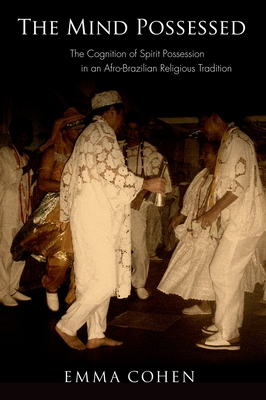
Spirit possession practices have long had a magnetizing effect on academic researchers but there have been few, if any, satisfactory theoretical treatments of spirit possession that attempt to account for its emergence and spread globally. Drawing on ethnographic data collected during eighteen months of fieldwork in Belem, northern Brazil, Cohen combines fine-grained descriptions and analyses of mediumistic activities in an Afro-Brazilian cult house with a scientifically-grounded explanation for the emergence and spread of ideas about spirits, possession and healing.
Cohen shows why spirit possession and its associated activities are inherently attention-grabbing. Making a radical departure from traditional anthropological, medicalist, and sociological analyses, she argues that a cognitive approach offers more precise and testable hypotheses concerning the spread and appeal of spirit concepts and possession activities.
This timely book presents new lines of enquiry for the cognitive science of religion (a rapidly growing field of interdisciplinary scholarship) and challenges the theoretical frameworks within which spirit possession practices have traditionally been understood.
Log in to write a review for this book.
No reviews yet. Be the first to share your opinion.
Biography not available.