Sachedina, Abdulaziz Author
Biography not available.

Browse all ART CRITICISM books
Browse all Ashworth books
Browse all FOLKLORE books
Browse all GARDENS books
Browse all GRAPHIC NOVELS books
Browse all Hamilton books
Browse all HISTORY - MEDIEVAL books
Browse all HUMOUR books
Browse all KINDRED books
Browse all LITERARY STUDIES books
Browse all LONDON books
Browse all Lozada books
Browse all Medical : Nursing - Mental Health books
Browse all MIND books
Browse all MUSEOLOGY books
Browse all NON-CLASSIFIABLE books
Browse all NONLINEAR SCIENCE books
Browse all Ormonde books
Browse all POPULAR SCIENCE books
Browse all RELIGIOUS STUDIES books
Browse all SPIRIT books
Browse all SPORT books
Browse all TRAVEL WRITING books
 Out of Stock
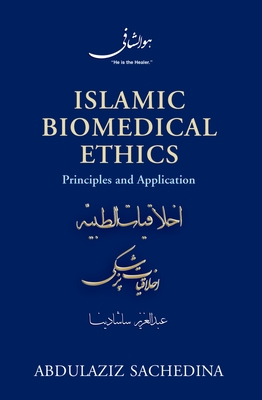
ISLAMIC BIOMEDICAL ETHICS
Paperback · ISBN 9780199860234
Inclusive of GST and other taxes
Arriving at your doorstep in 10-15 days
Our logisitcs team will make sure everyitem is delivered safely
| ISBN | 9780199860234 |
|---|---|
| Subtitle | ISLAMIC BIOMEDICAL ETHICS |
| Publisher | Oxford University Press |
| Publication date | August 2011 |
| Language | English |
| MRP | £41.99 GBP |
| Page count | 292 |
| Item weight | 91 g |
In this pioneering work, Abdulaziz Sachedina - a scholar with life-long academic training in Islamic law - relates classic Muslim religious values to the new ethical challenges that arise from medical research and practice. He depends on Muslim legal theory, but then looks deeper than juridical practice to search for the underlying reasons that determine the rightness or wrongness of a particular action. Drawing on the work of diverse Muslim theologians, he outlines a form of moral reasoning that can derive and produce decisions that underscore the spirit of the Shari'a. These decisions, he argues, still leave room to revisit earlier decisions and formulate new ones, which in turn need not be understood as absolute or final. After laying out this methodology, he applies it to a series of ethical questions surrounding the human life-cycle from birth to death, including such issues as abortion, euthanasia, and organ donation.
The implications of Sachedina's work are broad. His writing is unique in that it aims at conversing with Jewish and Christian ethics, moving beyond the Islamic fatwa literature to search for a common language of moral justification and legitimization among the followers of the Abrahamic traditions. He argues that Islamic theological ethics be organically connected with the legal tradition of Islam to enable it to sit in dialogue with secular and scripture-based bioethics in other faith communities. A breakthrough in Islamic bioethical studies, this volume is welcome and long-overdue reading for anyone interested in facing the difficult questions posed by modern medicine not only to the Muslim faithful but to the ethically-minded at large.
Log in to write a review for this book.
No reviews yet. Be the first to share your opinion.
Biography not available.