SHORTER Author
Biography not available.

Browse all FOLKLORE books
Browse all GARDENS books
Browse all GRAPHIC NOVELS books
Browse all HISTORY - MEDIEVAL books
Browse all HUMOUR books
Browse all Juvenile Fiction : Biographical - Other books
Browse all Juvenile Fiction : Historical - Other books
Browse all Juvenile Fiction : Legends, Myths, & Fables - Other books
Browse all Juvenile Fiction : People & Places - Other books
Browse all Juvenile Fiction : People & Places - United States - Other books
Browse all Juvenile Fiction : Religious - Other books
Browse all Juvenile Nonfiction : History - Other books
Browse all Juvenile Nonfiction : Mathematics - Advanced books
Browse all Juvenile Nonfiction : People & Places - Other books
Browse all Juvenile Nonfiction : People & Places - United States - Othe books
Browse all LITERARY STUDIES books
Browse all LONDON books
Browse all Medical : Nursing - Mental Health books
Browse all MIND books
Browse all MUSEOLOGY books
Browse all NON-CLASSIFIABLE books
Browse all NONLINEAR SCIENCE books
Browse all POPULAR SCIENCE books
Browse all RELIGIOUS STUDIES books
Browse all SPIRIT books
Browse all SPORT books
Browse all TRAVEL WRITING books
 Out of Stock
Hardback · ISBN 9780199948086
Inclusive of GST and other taxes
Arriving at your doorstep in 10-15 days
Our logisitcs team will make sure everyitem is delivered safely
| ISBN | 9780199948086 |
|---|---|
| Publisher | Academic |
| Publication date | February 2017 |
| Language | English |
| MRP | £41.99 GBP |
| Page count | 270 |
| Item weight | 123 g |
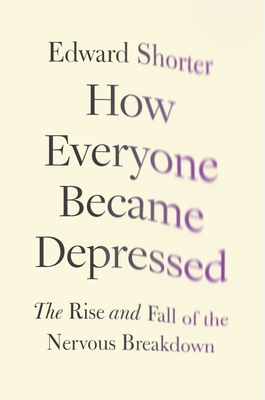
In How Everyone Became Depressed, Edward Shorter, a distinguished professor of psychiatry and the history of medicine argues for a return to the old fashioned concept of nervous illness. These are, he writes, diseases of the entire body, not the mind, and as was recognized as early as the 1600s. Shorter traces the evolution of the concept of "nerves" and the "nervous breakdown" in western medical thought. He points to a great paradigm shift in the first third of the twentieth century, driven especially by Freud, that transferred behavioral disorders from neurology to psychiatry, spotlighting the mind, not the body. The catch-all term "depression" now applies to virtually everything, "a jumble of non-disease entities, created by political infighting within psychiatry, by competitive struggles in the pharmaceutical industry, and by the whimsy of the regulators." Depression is a real and very serious illness, he argues; it should not be diagnosed so promiscuously, and certainly not without regard to the rest of the body. Meloncholia, he writes, "the quintessence of the nervous breakdown, reaches deep into the endocrine system, which governs the thyroid and adrenal glands among other organs."
In a learned yet provocative challenge to psychiatry, Shorter argues that the continuing misuse of "depression" represents nothing less than "the failure of the scientific imagination."
Log in to write a review for this book.
No reviews yet. Be the first to share your opinion.
Biography not available.