Woodbridge, R. Author
Biography not available.

Browse all FOLKLORE books
Browse all GARDENS books
Browse all GRAPHIC NOVELS books
Browse all HISTORY - MEDIEVAL books
Browse all HUMOUR books
Browse all Juvenile Fiction : Biographical - Other books
Browse all Juvenile Fiction : Historical - Other books
Browse all Juvenile Fiction : Legends, Myths, & Fables - Other books
Browse all Juvenile Fiction : People & Places - Other books
Browse all Juvenile Fiction : People & Places - United States - Other books
Browse all Juvenile Fiction : Religious - Other books
Browse all Juvenile Nonfiction : History - Other books
Browse all Juvenile Nonfiction : Mathematics - Advanced books
Browse all Juvenile Nonfiction : People & Places - Other books
Browse all Juvenile Nonfiction : People & Places - United States - Othe books
Browse all LITERARY STUDIES books
Browse all LONDON books
Browse all Medical : Nursing - Mental Health books
Browse all MIND books
Browse all MUSEOLOGY books
Browse all NON-CLASSIFIABLE books
Browse all NONLINEAR SCIENCE books
Browse all POPULAR SCIENCE books
Browse all RELIGIOUS STUDIES books
Browse all SPIRIT books
Browse all SPORT books
Browse all TRAVEL WRITING books
 Out of Stock
Hardback · ISBN 9780216931442
Inclusive of GST and other taxes
Arriving at your doorstep in 10-15 days
Our logisitcs team will make sure everyitem is delivered safely
| ISBN | 9780216931442 |
|---|---|
| Publisher | Springer |
| Publication date | January 1991 |
| Language | English |
| MRP | £79.99 GBP |
| Page count | 280 |
| Item weight | 128 g |
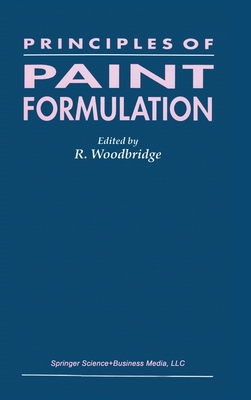
1 Getting the basics right.- 1.1 Introduction.- 1.2 Availability of raw material data.- 1.3 Clarifying the objective.- 1.4 Identifying formulating constraints.- 1.5 Use of standard formulation format.- 1.5.1 Costing laboratory formulations.- 1.5.2 Manufacturing formulations.- 1.6 Use of test schedules.- 1.7 Understanding the costing system.- 1.7.1 Raw material costs.- 1.7.2 Manufacturing costs.- 1.7.3 Container and filling costs.- 1.8 Know the competition.- 2 Establishing a structured development programme.- 2.1 Introduction.- 2.2 Raw material substitution.- 2.3 Cost reduction.- 2.4 Product improvement.- 2.5 Matching the competition.- 2.6 New products.- 2.6.1 Project 1.- 2.6.2 Project 2.- 2.7 New classes of raw material.- 2.8 New technology.- 3 Raw materials.- 3.1 Introduction.- 3.2 Resins.- 3.2.1 General.- 3.2.2 Types of resins available.- 3.2.3 Selection of resins.- 3.3 Pigments.- 3.3.1 General.- 3.3.2 White pigments (titanium dioxide).- 3.3.3 Coloured pigments.- 3.3.4 Extenders.- 3.3.5 Corrosion inhibiting pigments.- 3.4 Solvents, thinners and diluents.- 3.4.1 General.- 3.4.2 Solvents in air dry finishes.- 3.4.3 Solvents in cross-linked and stoving finishes.- 3.4.4 Solvents in aqueous finishes.- 3.5 Rheology modifiers.- 3.5.1 General.- 3.5.2 Solvent-thinned products.- 3.5.3 Water-thinned products.- 3.6 Additives.- 3.6.1 General.- 3.6.2 Dispersing/wetting agents.- 3.6.3 Driers.- 3.6.4 Preservatives/biocides.- 3.6.5 Insecticides.- 3.6.6 Can corrosion inhibitors.- 3.6.7 Flash rust inhibitors.- 3.6.8 UV absorbers.- 3.6.9 Reodorants.- 3.6.10 Anti-skin.- 3.6.11 Anti-flood/float.- 3.6.12 Anti-foam.- 3.6.13 Anti-gassing.- 3.6.14 Anti-static.- 3.6.15 Anti-freeze.- 4 Volume relationships.- 4.1 Introduction.- 4.2 The CPVC concept.- 4.3 Establishing the CPVC.- 4.3.1 The CPVC cell method.- 4.3.2 The oil absorption method.- 4.3.3 Effect of latex vehicles on CPVC.- 4.3.4 Other means for CPVC determination.- 4.4 The relationship of PVC to CPVC.- 4.5 The porosity concept.- 4.5.1 Effect of porosity on hiding power.- 4.6 Use in formulation.- 4.6.1 Spacing extenders.- 4.6.2 Modifying a standard product.- 4.6.3 Latex paints.- 4.6.4 Flat latex paints.- 4.6.5 Effect of relative BPI.- 4.6.6 Matching a competitive sample.- 4.7 Summary.- References.- 5 Dry hiding-an alternative to titanium dioxide.- 5.1 Introduction.- 5.2 Available technologies.- 5.3 Relevance of packing considerations.- 5.4 Pittment.- 5.5 Spindrift.- 5.6 Plastic pigment.- 5.7 Opaque polymer.- 6 Computer techniques.- 6.1 Introduction.- 6.2 Computerised process control.- 6.3 Colour matching.- 6.4 Formulation and costing programmes.- 6.4.1 Raw material file.- 6.4.2 Formulation file.- 6.4.3 Calculation file.- 6.4.4 Reformulation programmes.- 6.5 Experimental designs.- 6.5.1 Randomisation.- 6.5.2 Randomised block.- 6.5.3 Latin square.- 6.5.4 Factorial experiments.- 6.5.5 Fractional factorial design.- 6.5.6 Box - Behnken.- 6.6 Experimental design with mixtures.- 6.6.1 Three component mixture design.- 6.6.2 Four component mixture design.- 6.6.3 Simplex mixture screening design.- 6.7 Theoretical approach to formulation.- References.- 7 Design for bulk manufacture.- 7.1 Introduction.- 7.1.1 The basic problem.- 7.1.2 Conditions for dispersion.- 7.1.3 Particulate solids.- 7.1.4 The continuous phase.- 7.2 Stages of bulk manufacture.- 7.2.1 Introduction.- 7.2.2 Stable base formulation.- 7.2.3 Initial dispersion formulation.- 7.2.4 Let-down stages.- 7.2.5 Completion.- 7.3 Types of dispersion equipment.- 7.3.1 Introduction.- 7.3.2 Ball mills.- 7.3.3 Attritors.- 7.3.4 Batch bead mills.- 7.3.5 High shear stress mixers.- 7.3.6 Low shear stress mixers.- 7.3.7 Other types of mixers.- 7.3.8 Continuous mills.- 7.3.9 Sand mills.- 7.4 Formulating for optimum wetting and dispersion.- 7.4.1 Introduction.- 7.4.2 Ball mills.- 7.4.3 Attritors.- 7.4.4 Batch bead mills.- 7.4.5 High shear stress mixers.- 7.4.6 Low shear stress mixers.- 7.4.7 Other high speed mixers.- 7.4.8 Continuous mills.- 7.5 Choice of equi...
Log in to write a review for this book.
No reviews yet. Be the first to share your opinion.
Biography not available.