Klose, Alexander Author
Biography not available.

Browse all FOLKLORE books
Browse all GARDENS books
Browse all GRAPHIC NOVELS books
Browse all HISTORY - MEDIEVAL books
Browse all HUMOUR books
Browse all Juvenile Fiction : Biographical - Other books
Browse all Juvenile Fiction : Historical - Other books
Browse all Juvenile Fiction : Legends, Myths, & Fables - Other books
Browse all Juvenile Fiction : People & Places - Other books
Browse all Juvenile Fiction : People & Places - United States - Other books
Browse all Juvenile Fiction : Religious - Other books
Browse all Juvenile Nonfiction : History - Other books
Browse all Juvenile Nonfiction : Mathematics - Advanced books
Browse all Juvenile Nonfiction : People & Places - Other books
Browse all Juvenile Nonfiction : People & Places - United States - Othe books
Browse all LITERARY STUDIES books
Browse all LONDON books
Browse all Medical : Nursing - Mental Health books
Browse all MIND books
Browse all MUSEOLOGY books
Browse all NON-CLASSIFIABLE books
Browse all NONLINEAR SCIENCE books
Browse all POPULAR SCIENCE books
Browse all RELIGIOUS STUDIES books
Browse all SPIRIT books
Browse all SPORT books
Browse all TRAVEL WRITING books
 Out of Stock
Paperback · ISBN 9780262051194
Inclusive of GST and other taxes
Arriving at your doorstep in 10-15 days
Our logisitcs team will make sure everyitem is delivered safely
| ISBN | 9780262051194 |
|---|---|
| Publisher | MIT Press |
| Publication date | March 2025 |
| Language | English |
| MRP | £24.16 GBP |
| Page count | 412 |
| Item weight | 97 g |
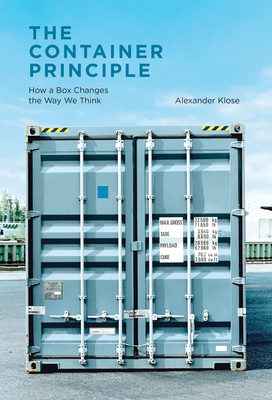
We live in a world organized around the container. Standardized twenty- and forty-foot shipping containers carry material goods across oceans and over land; provide shelter, office space, and storage capacity; inspire films, novels, metaphors, and paradigms. Today, TEU (Twenty Foot Equivalent Unit, the official measurement for shipping containers) has become something like a global currency. A container ship, sailing under the flag of one country but owned by a corporation headquartered in another, carrying auto parts from Japan, frozen fish from Vietnam, and rubber ducks from China, offers a vivid representation of the increasing, world-is-flat globalization of the international economy. In The Container Principle, Alexander Klose investigates the principle of the container and its effect on the way we live and think.
Klose explores a series of "container situations" in their historical, political, and cultural contexts. He examines the container as a time capsule, sometimes breaking loose and washing up onshore to display an inventory of artifacts of our culture. He explains the "Matryoshka principle," explores the history of land-water transport, and charts the three phases of container history. He examines the rise of logistics, the containerization of computing in the form of modularization and standardization, the architecture of container-like housing (citing both Le Corbusier and Malvina Reynolds's "Little Boxes"), and a range of artistic projects inspired by containers. Containerization, spreading from physical storage to organizational metaphors, Klose argues, signals a change in the fundamental order of thinking and things. It has become a principle.
Log in to write a review for this book.
No reviews yet. Be the first to share your opinion.
Biography not available.
Biography not available.