Murray, David W. Author
Biography not available.

Browse all FOLKLORE books
Browse all GARDENS books
Browse all GRAPHIC NOVELS books
Browse all HISTORY - MEDIEVAL books
Browse all HUMOUR books
Browse all Juvenile Fiction : Biographical - Other books
Browse all Juvenile Fiction : Historical - Other books
Browse all Juvenile Fiction : Legends, Myths, & Fables - Other books
Browse all Juvenile Fiction : People & Places - Other books
Browse all Juvenile Fiction : People & Places - United States - Other books
Browse all Juvenile Fiction : Religious - Other books
Browse all Juvenile Nonfiction : History - Other books
Browse all Juvenile Nonfiction : Mathematics - Advanced books
Browse all Juvenile Nonfiction : People & Places - Other books
Browse all Juvenile Nonfiction : People & Places - United States - Othe books
Browse all LITERARY STUDIES books
Browse all LONDON books
Browse all Medical : Nursing - Mental Health books
Browse all MIND books
Browse all MUSEOLOGY books
Browse all NON-CLASSIFIABLE books
Browse all NONLINEAR SCIENCE books
Browse all POPULAR SCIENCE books
Browse all RELIGIOUS STUDIES books
Browse all SPIRIT books
Browse all SPORT books
Browse all TRAVEL WRITING books
 Out of Stock
Paperback · ISBN 9780262528160
Inclusive of GST and other taxes
Arriving at your doorstep in 10-15 days
Our logisitcs team will make sure everyitem is delivered safely
| ISBN | 9780262528160 |
|---|---|
| Publisher | MIT Press |
| Publication date | September 1990 |
| Language | English |
| MRP | £24.65 GBP |
| Page count | 262 |
| Item weight | 79 g |
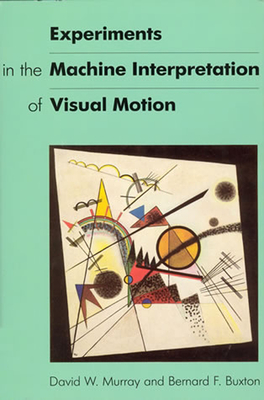
If robots are to act intelligently in everyday environments, they must have a perception of motion and its consequences. This book describes experimental advances made in the interpretation of visual motion over the last few years that have moved researchers closer to emulating the way in which we recover information about the surrounding world. It describes algorithms that form a complete, implemented, and tested system developed by the authors to measure two-dimensional motion in an image sequence, then to compute three-dimensional structure and motion, and finally to recognize the moving objects.
The authors develop algorithms to interpret visual motion around four principal constraints. The first and simplest allows the scene structure to be recovered on a pointwise basis. The second constrains the scene to a set of connected straight edges. The third makes the transition between edge and surface representations by demanding that the wireframe recovered is strictly polyhedral. And the final constraint assumes that the scene is comprised of planar surfaces, and recovers them directly.
Contents
Image, Scene, and Motion - Computing Image Motion - Structure from Motion of Points - The Structure and Motion of Edges - From Edges to Surfaces - Structure and Motion of Planes - Visual Motion Segmentation - Matching to Edge Models - Matching to Planar Surfaces
Log in to write a review for this book.
No reviews yet. Be the first to share your opinion.
Biography not available.
Biography not available.