Adda, Jerome Author
Biography not available.

Browse all ART CRITICISM books
Browse all Ashworth books
Browse all FOLKLORE books
Browse all GARDENS books
Browse all GRAPHIC NOVELS books
Browse all Hamilton books
Browse all HISTORY - MEDIEVAL books
Browse all HUMOUR books
Browse all Juvenile Fiction : Biographical - Other books
Browse all Juvenile Fiction : Historical - Other books
Browse all Juvenile Fiction : Legends, Myths, & Fables - Other books
Browse all Juvenile Fiction : People & Places - Other books
Browse all Juvenile Fiction : People & Places - United States - Other books
Browse all Juvenile Fiction : Religious - Other books
Browse all Juvenile Nonfiction : History - Other books
Browse all Juvenile Nonfiction : Mathematics - Advanced books
Browse all Juvenile Nonfiction : People & Places - Other books
Browse all Juvenile Nonfiction : People & Places - United States - Othe books
Browse all KINDRED books
Browse all LITERARY STUDIES books
Browse all LONDON books
Browse all Lozada books
Browse all Medical : Nursing - Mental Health books
Browse all MIND books
Browse all MUSEOLOGY books
Browse all NON-CLASSIFIABLE books
Browse all NONLINEAR SCIENCE books
Browse all Ormonde books
Browse all POPULAR SCIENCE books
Browse all RELIGIOUS STUDIES books
Browse all SPIRIT books
Browse all SPORT books
Browse all TRAVEL WRITING books
 Out of Stock
Paperback · ISBN 9780262547888
Inclusive of GST and other taxes
Arriving at your doorstep in 10-15 days
Our logisitcs team will make sure everyitem is delivered safely
| ISBN | 9780262547888 |
|---|---|
| Publisher | MIT Press |
| Publication date | May 2023 |
| Language | English |
| MRP | £47.24 GBP |
| Page count | 296 |
| Item weight | 97 g |
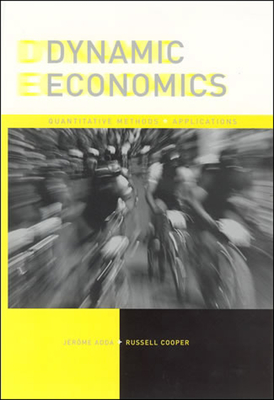
This book is an effective, concise text for students and researchers that combines the tools of dynamic programming with numerical techniques and simulation-based econometric methods. Doing so, it bridges the traditional gap between theoretical and empirical research and offers an integrated framework for studying applied problems in macroeconomics and microeconomics.
In part I the authors first review the formal theory of dynamic optimization; they then present the numerical tools and econometric techniques necessary to evaluate the theoretical models. In language accessible to a reader with a limited background in econometrics, they explain most of the methods used in applied dynamic research today, from the estimation of probability in a coin flip to a complicated nonlinear stochastic structural model. These econometric techniques provide the final link between the dynamic programming problem and data. Part II is devoted to the application of dynamic programming to specific areas of applied economics, including the study of business cycles, consumption, and investment behavior. In each instance the authors present the specific optimization problem as a dynamic programming problem, characterize the optimal policy functions, estimate the parameters, and use models for policy evaluation.
The original contribution of Dynamic Economics: Quantitative Methods and Applications lies in the integrated approach to the empirical application of dynamic optimization programming models. This integration shows that empirical applications actually complement the underlying theory of optimization, while dynamic programming problems provide needed structure for estimation and policy evaluation.
Log in to write a review for this book.
No reviews yet. Be the first to share your opinion.
Biography not available.
Biography not available.