Odling-Smee, John Author
Biography not available.

Browse all FOLKLORE books
Browse all GARDENS books
Browse all GRAPHIC NOVELS books
Browse all HISTORY - MEDIEVAL books
Browse all HUMOUR books
Browse all Juvenile Fiction : Biographical - Other books
Browse all Juvenile Fiction : Historical - Other books
Browse all Juvenile Fiction : Legends, Myths, & Fables - Other books
Browse all Juvenile Fiction : People & Places - Other books
Browse all Juvenile Fiction : People & Places - United States - Other books
Browse all Juvenile Fiction : Religious - Other books
Browse all Juvenile Nonfiction : History - Other books
Browse all Juvenile Nonfiction : Mathematics - Advanced books
Browse all Juvenile Nonfiction : People & Places - Other books
Browse all Juvenile Nonfiction : People & Places - United States - Othe books
Browse all LITERARY STUDIES books
Browse all LONDON books
Browse all Medical : Nursing - Mental Health books
Browse all MIND books
Browse all MUSEOLOGY books
Browse all NON-CLASSIFIABLE books
Browse all NONLINEAR SCIENCE books
Browse all POPULAR SCIENCE books
Browse all RELIGIOUS STUDIES books
Browse all SPIRIT books
Browse all SPORT books
Browse all TRAVEL WRITING books
 Out of Stock
Paperback · ISBN 9780262548168
Inclusive of GST and other taxes
Arriving at your doorstep in 10-15 days
Our logisitcs team will make sure everyitem is delivered safely
| ISBN | 9780262548168 |
|---|---|
| Publisher | MIT Press |
| Publication date | September 2024 |
| Language | English |
| MRP | £48.27 GBP |
| Page count | 410 |
| Item weight | 121 g |
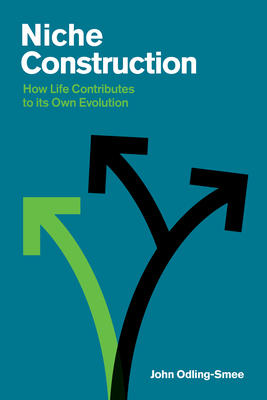
In Niche Construction, John Odling-Smee, the leading authority on niche construction theory, extends evolutionary theory from an explanation of how populations of organisms respond to natural selection pressures in their environments to a more general theory about the coevolution of organisms with their environments. Organisms, he shows, cause changes in their local external environments by interacting with them, thereby contributing in fundamental ways to their own and one another's evolution. This book applies niche construction theory to current problems such as human-induced global warming and suggests how humans might contribute positively to the future evolution of life on Earth.
Odling-Smee explains how orthodox evolutionary theory falls short in two ways. First, it does not describe how organisms contribute to their own and one another's evolution through their environment-changing niche constructing activities. Second, it fails to explain how genetic evolution can give rise to supplementary knowledge-gaining processes in many species. These include certain developmental processes in individual organisms and socio-cultural processes in animals, including humans. Neo-Darwinism, the author writes, assesses the fitness of individual organisms in populations in terms of their capacity to survive and reproduce, but without attributing these capacities to the active, purposeful agency of organisms. He argues that the purposeful agency of individual organisms plays a central role in evolution. He also discusses the relationship of an organism's energy-consuming activities and the second law of thermodynamics.
Log in to write a review for this book.
No reviews yet. Be the first to share your opinion.
Biography not available.