Haugeland, John Author
Biography not available.

Browse all ART CRITICISM books
Browse all Ashworth books
Browse all FOLKLORE books
Browse all GARDENS books
Browse all GRAPHIC NOVELS books
Browse all Hamilton books
Browse all HISTORY - MEDIEVAL books
Browse all HUMOUR books
Browse all KINDRED books
Browse all LITERARY STUDIES books
Browse all LONDON books
Browse all Lozada books
Browse all Medical : Nursing - Mental Health books
Browse all MIND books
Browse all MUSEOLOGY books
Browse all NON-CLASSIFIABLE books
Browse all NONLINEAR SCIENCE books
Browse all Ormonde books
Browse all POPULAR SCIENCE books
Browse all RELIGIOUS STUDIES books
Browse all SPIRIT books
Browse all SPORT books
Browse all TRAVEL WRITING books
 Out of Stock
Paperback · ISBN 9780262580953
Inclusive of GST and other taxes
Arriving at your doorstep in 10-15 days
Our logisitcs team will make sure everyitem is delivered safely
| ISBN | 9780262580953 |
|---|---|
| Publisher | MIT Press |
| Publication date | January 1989 |
| Language | English |
| MRP | £39.37 GBP |
| Page count | 302 |
| Item weight | 88 g |
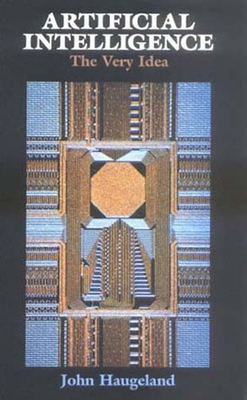
Deciding where the truth lies between these two extremes is the main purpose of John Haugeland's marvelously lucid and witty book on what artificial intelligence is all about. Although presented entirely in non-technical terms, it neither oversimplifies the science nor evades the fundamental philosophical issues. Far from ducking the really hard questions, it takes them on, one by one.
Artificial intelligence, Haugeland notes, is based on a very good idea, which might well be right, and just as well might not. That idea, the idea that human thinking and machine computing are "radically the same," provides the central theme for his illuminating and provocative book about this exciting new field. After a brief but revealing digression in intellectual history, Haugeland systematically tackles such basic questions as: What is a computer really? How can a physical object "mean" anything? What are the options for computational organization? and What structures have been proposed and tried as actual scientific models for intelligence?
In a concluding chapter he takes up several outstanding problems and puzzles--including intelligence in action, imagery, feelings and personality--and their enigmatic prospects for solution.
Log in to write a review for this book.
No reviews yet. Be the first to share your opinion.
Biography not available.