Boyle, John P. Author
Biography not available.

Browse all FOLKLORE books
Browse all GARDENS books
Browse all GRAPHIC NOVELS books
Browse all HISTORY - MEDIEVAL books
Browse all HUMOUR books
Browse all Juvenile Fiction : Biographical - Other books
Browse all Juvenile Fiction : Historical - Other books
Browse all Juvenile Fiction : Legends, Myths, & Fables - Other books
Browse all Juvenile Fiction : People & Places - Other books
Browse all Juvenile Fiction : People & Places - United States - Other books
Browse all Juvenile Fiction : Religious - Other books
Browse all Juvenile Nonfiction : History - Other books
Browse all Juvenile Nonfiction : Mathematics - Advanced books
Browse all Juvenile Nonfiction : People & Places - Other books
Browse all Juvenile Nonfiction : People & Places - United States - Othe books
Browse all LITERARY STUDIES books
Browse all LONDON books
Browse all Medical : Nursing - Mental Health books
Browse all MIND books
Browse all MUSEOLOGY books
Browse all NON-CLASSIFIABLE books
Browse all NONLINEAR SCIENCE books
Browse all POPULAR SCIENCE books
Browse all RELIGIOUS STUDIES books
Browse all SPIRIT books
Browse all SPORT books
Browse all TRAVEL WRITING books
 Out of Stock
Hardback · ISBN 9780268008055
Inclusive of GST and other taxes
Arriving at your doorstep in 10-15 days
Our logisitcs team will make sure everyitem is delivered safely
| ISBN | 9780268008055 |
|---|---|
| Publisher | University of Notre Dame Press |
| Publication date | February 1995 |
| Language | English |
| MRP | £38.99 GBP |
| Page count | 248 |
| Item weight | 118 g |
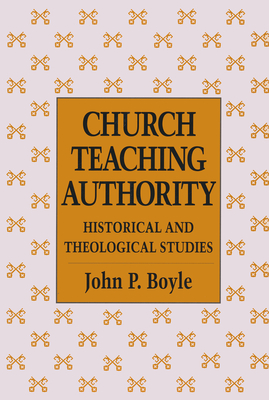
Humanae Vitae, the 1968 papal encyclical on contraception, unleashed a flood of argument about church teaching authority and the extent to which the pope and the Roman doctrinal congregation claim preeminent authority over the teaching of bishops and theologians. John P. Boyle presents here the first book-length study that traces the historical and theological developments that produced official statements by the church about its own teaching authority and the assent owed to it, especially in the nineteenth and twentieth centuries. Boyle suggests that in order to understand the official teaching of today we need to examine the history of such notions as "ordinary magisterium," "obsequium of the intellect and will," and "reception," backwards to their roots in post-Reformation Catholic theology and even further back to their medieval origin.
Boyle begins by examining the origin of the term "ordinary magisterium," relying on materials from the Vatican Secret Archives. He describes the work of the nuncio in Munich and the curia in Rome which resulted in Pius IX's letter Tuas Libenter, which introduced "ordinary magisterium" into papal teaching. Boyle then summarizes various doctrinal questions about the magisterium, focusing on the epistemological issues relating to the magisterium and natural law. Boyle explores the term obsequium mentis et voluntatis used by the Second Vatican Council in Lumen Gentium for the assent owed to magisterial teaching. In the context of allowable dissent, he discusses the principle of probabilism. He then examines the 1983 Code of Canon Law and the 1990 CDF Instruction Donum Veritatis, which outlined the ecclesial role of the theologian. The volume ends with Boyle's thoughts on future trends in church teaching authority that will affect not only theologians but also the laity.
Boyle presents the first book-length study tracing the historical and theological developments that produced official statements by the church about its own teaching authority and the assent owed to it.
Log in to write a review for this book.
No reviews yet. Be the first to share your opinion.
Biography not available.