Neuhaus, Richard John Editor
Biography not available.

Browse all FOLKLORE books
Browse all GARDENS books
Browse all GRAPHIC NOVELS books
Browse all HISTORY - MEDIEVAL books
Browse all HUMOUR books
Browse all Juvenile Fiction : Biographical - Other books
Browse all Juvenile Fiction : Historical - Other books
Browse all Juvenile Fiction : Legends, Myths, & Fables - Other books
Browse all Juvenile Fiction : People & Places - Other books
Browse all Juvenile Fiction : People & Places - United States - Other books
Browse all Juvenile Fiction : Religious - Other books
Browse all Juvenile Nonfiction : History - Other books
Browse all Juvenile Nonfiction : Mathematics - Advanced books
Browse all Juvenile Nonfiction : People & Places - Other books
Browse all Juvenile Nonfiction : People & Places - United States - Othe books
Browse all LITERARY STUDIES books
Browse all LONDON books
Browse all Medical : Nursing - Mental Health books
Browse all MIND books
Browse all MUSEOLOGY books
Browse all NON-CLASSIFIABLE books
Browse all NONLINEAR SCIENCE books
Browse all POPULAR SCIENCE books
Browse all RELIGIOUS STUDIES books
Browse all SPIRIT books
Browse all SPORT books
Browse all TRAVEL WRITING books
 Out of Stock
Paperback · ISBN 9780268027575
Inclusive of GST and other taxes
Arriving at your doorstep in 10-15 days
Our logisitcs team will make sure everyitem is delivered safely
| ISBN | 9780268027575 |
|---|---|
| Publisher | University of Notre Dame Press |
| Publication date | April 2000 |
| Language | English |
| MRP | £15.99 GBP |
| Page count | 196 |
| Item weight | 65 g |
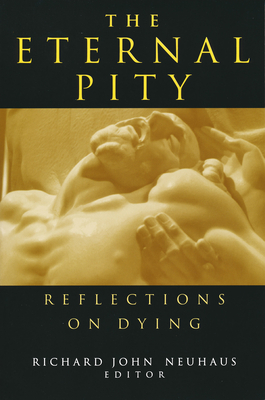
Drawing upon a vast range of human experience and reflection, The Eternal Pity: Reflections on Dying demonstrates how people try to cope with the inevitability of death. Different cultures, informed by religious beliefs and sometimes desperate hope, teach people to respond to their own death and the deaths of others in modes as various as defiance, stoic resignation, and unbridled grief. In addition to examples from literature, poetry, and religious texts, Father Richard John Neuhaus provides an intensely personal account of his encounter with death through emergency cancer surgery and reflects on how that encounter has changed the way he lives. While many writers have deplored the "denial of death" in our culture, The Eternal Pity shows how themes of death and dying are nevertheless perennial and pervasive. Society may be viewed as a disorganized march of multitudes waving little banners of meaning before the threat of nonbeing that is death. Some selections in this book depict people utterly surprised by their mortality; others highlight how the whole of one's life can be a preparation for what used to be called "a good death." For some, life is a relentless effort to hold death at bay; for others, death is, although not welcomed, reflectively anticipated. Nothing so universally defines the human condition as the fact that we shall die. The Eternal Pity helps us to understand how the prospect of death compels decisions about how we might live.
Log in to write a review for this book.
No reviews yet. Be the first to share your opinion.
Biography not available.