Göcke, Benedikt Paul Editor
Biography not available.

Browse all ART CRITICISM books
Browse all Ashworth books
Browse all FOLKLORE books
Browse all GARDENS books
Browse all GRAPHIC NOVELS books
Browse all Hamilton books
Browse all HISTORY - MEDIEVAL books
Browse all HUMOUR books
Browse all KINDRED books
Browse all LITERARY STUDIES books
Browse all LONDON books
Browse all Lozada books
Browse all Medical : Nursing - Mental Health books
Browse all MIND books
Browse all MUSEOLOGY books
Browse all NON-CLASSIFIABLE books
Browse all NONLINEAR SCIENCE books
Browse all Ormonde books
Browse all POPULAR SCIENCE books
Browse all RELIGIOUS STUDIES books
Browse all SPIRIT books
Browse all SPORT books
Browse all TRAVEL WRITING books
 Out of Stock
Paperback · ISBN 9780268030001
Inclusive of GST and other taxes
Arriving at your doorstep in 10-15 days
Our logisitcs team will make sure everyitem is delivered safely
| ISBN | 9780268030001 |
|---|---|
| Publisher | University of Notre Dame Press |
| Publication date | June 2012 |
| Language | English |
| MRP | £36.99 GBP |
| Page count | 386 |
| Item weight | 114 g |
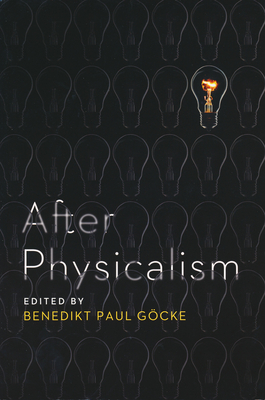
Although physicalism has been the dominant position in recent work in the philosophy of mind, this dominance has not prevented a small but growing number of philosophers from arguing that physicalism is untenable for several reasons: both ontologically and epistemologically it cannot reduce mentality to the realm of the physical, and its attempts to reduce subjectivity to objectivity have thoroughly failed. The contributors to After Physicalism provide powerful alternatives to the physicalist account of the human mind from a dualistic point of view and argue that the reductive and naturalistic paradigm in philosophy has lost its force.
The essays in this collection all firmly engage in a priori metaphysics. Those by Uwe Meixner, E. J. Lowe, John Foster, Alvin Plantinga, and Richard Swinburne are concerned with ways to establish the truth of dualism. Essays by William Hasker, A. D. Smith, and Howard Robinson deal with the relation between physicalism and dualism. Benedikt Paul Göcke argues that the "I" is not a particular and Stephen Priest that "I have to understand myself not as a thing but as no-thing-ness." In the final essay, Thomas Schärtl argues that there are limits to dualism as indicated by the concept of resurrection. By including two classical essays by Plantinga and Swinburne, the volume conveniently brings together some of the best and the newest thinking in making the philosophical case for dualism.
Log in to write a review for this book.
No reviews yet. Be the first to share your opinion.
Biography not available.