Clark, William A. Author
Biography not available.

Browse all FOLKLORE books
Browse all GARDENS books
Browse all GRAPHIC NOVELS books
Browse all HISTORY - MEDIEVAL books
Browse all HUMOUR books
Browse all Juvenile Fiction : Biographical - Other books
Browse all Juvenile Fiction : Historical - Other books
Browse all Juvenile Fiction : Legends, Myths, & Fables - Other books
Browse all Juvenile Fiction : People & Places - Other books
Browse all Juvenile Fiction : People & Places - United States - Other books
Browse all Juvenile Fiction : Religious - Other books
Browse all Juvenile Nonfiction : History - Other books
Browse all Juvenile Nonfiction : Mathematics - Advanced books
Browse all Juvenile Nonfiction : People & Places - Other books
Browse all Juvenile Nonfiction : People & Places - United States - Othe books
Browse all LITERARY STUDIES books
Browse all LONDON books
Browse all Medical : Nursing - Mental Health books
Browse all MIND books
Browse all MUSEOLOGY books
Browse all NON-CLASSIFIABLE books
Browse all NONLINEAR SCIENCE books
Browse all POPULAR SCIENCE books
Browse all RELIGIOUS STUDIES books
Browse all SPIRIT books
Browse all SPORT books
Browse all TRAVEL WRITING books
 Out of Stock
SOVIET REGIONAL ELITE MOBILITY
Hardback · ISBN 9780275931247
Inclusive of GST and other taxes
Arriving at your doorstep in 10-15 days
Our logisitcs team will make sure everyitem is delivered safely
| ISBN | 9780275931247 |
|---|---|
| Subtitle | SOVIET REGIONAL ELITE MOBILITY |
| Publisher | Praeger |
| Publication date | July 1989 |
| Language | English |
| MRP | £75.00 GBP |
| Page count | 224 |
| Item weight | 109 g |
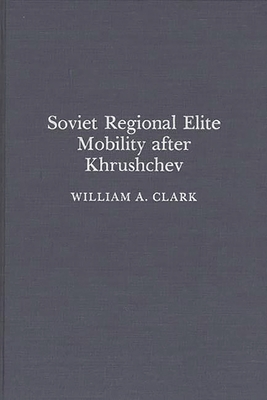
Clark's groundbreaking study covers the period in Soviet political history from the fall of Nikita Khrushchev in late 1964 through the spring of 1987 and examines the forces affecting regional elite mobility throughout the Soviet Union during these years. Turning the explanatory focus away from the traditional areas of patronage and clientelism, Clark adopts a novel approach to the subject by concentrating on structural variables such as the economic, social, and demographic aspects of the regions themselves as key elements of an explanation for long-term mobility trends. In addition to his focus on non-traditional variables, the broad chronological scope of the study and the fact that all Soviet republics with equivalent party structures are examined make Clark's work especially valuable for graduate students and scholars of Soviet politics and government seeking a more general and inclusive explanation of regional elite mobility than has been available in previous studies of the subject.
The study is based on an exhaustive examination of the careers of over 275 Obkom (regional party committees) First Secretaries. As a result of this analysis, the 129 regional party structures of the USSR are ranked hierarchically with respect to political mobility. Throughout the study, Clark seeks to isolate non-idiosyncratic variables to explain the significant variance in mobility opportunities offered by the various regional party units. Thus, rather than relying on the traditional personalistic variables, Clark seeks to identify independent variables that have explanatory value throughout the Soviet system. Finally, Clark examines the effects of background characteristics and functional career types on elite mobility at the Obkom tier, and analyzes changes in regional cadres policy after Brezhnev. Six appendices provide additional information for the student and researcher.
Log in to write a review for this book.
No reviews yet. Be the first to share your opinion.
Biography not available.
Biography not available.