Olshon, Andrew F. Author
Biography not available.

Browse all FOLKLORE books
Browse all GARDENS books
Browse all GRAPHIC NOVELS books
Browse all HISTORY - MEDIEVAL books
Browse all HUMOUR books
Browse all Juvenile Fiction : Biographical - Other books
Browse all Juvenile Fiction : Historical - Other books
Browse all Juvenile Fiction : Legends, Myths, & Fables - Other books
Browse all Juvenile Fiction : People & Places - Other books
Browse all Juvenile Fiction : People & Places - United States - Other books
Browse all Juvenile Fiction : Religious - Other books
Browse all Juvenile Nonfiction : History - Other books
Browse all Juvenile Nonfiction : Mathematics - Advanced books
Browse all Juvenile Nonfiction : People & Places - Other books
Browse all Juvenile Nonfiction : People & Places - United States - Othe books
Browse all LITERARY STUDIES books
Browse all LONDON books
Browse all Medical : Nursing - Mental Health books
Browse all MIND books
Browse all MUSEOLOGY books
Browse all NON-CLASSIFIABLE books
Browse all NONLINEAR SCIENCE books
Browse all POPULAR SCIENCE books
Browse all RELIGIOUS STUDIES books
Browse all SPIRIT books
Browse all SPORT books
Browse all TRAVEL WRITING books
 Out of Stock
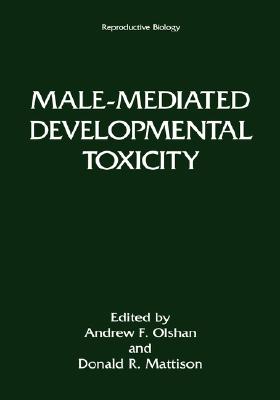
MALE-MEDIATED DEVELOPMENTAL TO
Hardback · ISBN 9780306448157
Inclusive of GST and other taxes
Arriving at your doorstep in 10-15 days
Our logisitcs team will make sure everyitem is delivered safely
| ISBN | 9780306448157 |
|---|---|
| Subtitle | MALE-MEDIATED DEVELOPMENTAL TO |
| Publisher | Springer |
| Publication date | November 1994 |
| Language | English |
| MRP | £179.99 GBP |
| Page count | 424 |
| Item weight | 209 g |
The cause of many of the adverse reproductive outcomes and developmental diseases among offspring is not well understood. Most of the epidemiologic and experimental animal research has focused on the relationship between maternal exposures including medications, tobacco smoke, alcohol, infections, and occupation and the occurrence of spontaneous abortion, low birth weight, and birth defects. The potential role of paternal exposures has not been investigated as extensively despite long-standing animal research that demonstrates the induction of mutations in the male germ cell after exposure to certain agents and subsequent reproductive failure or early pregnancy loss. Given this relative lack of interest, acquisition of epidemiologic data and the development of a definitive model or mechanism for potential male-mediated effects has been hindered. However, recent laboratory and epidemiologic investigations have suggested that paternal exposures may be more important than previously suspected. This topic has been termed by some as "male-mediated developmental toxicity. " This is meant to refer to the effects of exposures and other factors relating to the male parent that result in toxicity to the conceptus and abnormal development. The developmental endpoints of interest can include fetal loss, congenital abnormalities, growth retardation, cancer, and neurobehavioral effects. These effects may operate through a variety of mechanisms including gene mutation, chromosomal aberrations, seminal fluid transfer of toxicants and epigenetic events.
Log in to write a review for this book.
No reviews yet. Be the first to share your opinion.
Biography not available.
Biography not available.
Biography not available.