Bacon, Robert Author
Biography not available.

Browse all FOLKLORE books
Browse all GARDENS books
Browse all GRAPHIC NOVELS books
Browse all HISTORY - MEDIEVAL books
Browse all HUMOUR books
Browse all Juvenile Fiction : Biographical - Other books
Browse all Juvenile Fiction : Historical - Other books
Browse all Juvenile Fiction : Legends, Myths, & Fables - Other books
Browse all Juvenile Fiction : People & Places - Other books
Browse all Juvenile Fiction : People & Places - United States - Other books
Browse all Juvenile Fiction : Religious - Other books
Browse all Juvenile Nonfiction : History - Other books
Browse all Juvenile Nonfiction : Mathematics - Advanced books
Browse all Juvenile Nonfiction : People & Places - Other books
Browse all Juvenile Nonfiction : People & Places - United States - Othe books
Browse all LITERARY STUDIES books
Browse all LONDON books
Browse all Medical : Nursing - Mental Health books
Browse all MIND books
Browse all MUSEOLOGY books
Browse all NON-CLASSIFIABLE books
Browse all NONLINEAR SCIENCE books
Browse all POPULAR SCIENCE books
Browse all RELIGIOUS STUDIES books
Browse all SPIRIT books
Browse all SPORT books
Browse all TRAVEL WRITING books
 Out of Stock
Paperback · ISBN 9780333647714
Inclusive of GST and other taxes
Arriving at your doorstep in 10-15 days
Our logisitcs team will make sure everyitem is delivered safely
| ISBN | 9780333647714 |
|---|---|
| Publisher | Palgrave Macmillan |
| Publication date | April 1996 |
| Language | English |
| MRP | £18.99 GBP |
| Page count | 324 |
| Item weight | 91 g |
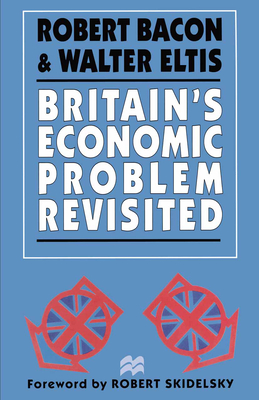
This 1996 edition of Britain's Economic Problem opens with a substantial new chapter, 'Bacon and Eltis after 20 Years', in which the authors assess the impact of the policies of successive Conservative governments to bring British public expenditure under control. They also develop their theory and apply it to Sweden which has experienced the greatest increase in public expenditure of any European economy. This edition includes a complete reprint of the 1978 second edition of Britain's Economic Problem: Too Few Producers which Harry G. Johnson described as 'interesting, both for its explanation of 'the British disease' and for the economic-theoretical foundations on which its analysis is based'. The original book provided a new explanation of the decline of the British economy which showed how a growing shift of Britain's resources from the production of goods and services which can be marketed at home and overseas to the provision of unmarketed public services simultaneously: - reduced the rate of growth and weakened the balance of payments - reduced investment and the economy's ability to provide productive jobs - fuelled the accelerating inflation and obstructive trade union behaviour from which Britain suffered.
Log in to write a review for this book.
No reviews yet. Be the first to share your opinion.
Biography not available.
Biography not available.