Henry, Patrick Author
Biography not available.

Browse all FOLKLORE books
Browse all GARDENS books
Browse all GRAPHIC NOVELS books
Browse all HISTORY - MEDIEVAL books
Browse all HUMOUR books
Browse all Juvenile Fiction : Biographical - Other books
Browse all Juvenile Fiction : Historical - Other books
Browse all Juvenile Fiction : Legends, Myths, & Fables - Other books
Browse all Juvenile Fiction : People & Places - Other books
Browse all Juvenile Fiction : People & Places - United States - Other books
Browse all Juvenile Fiction : Religious - Other books
Browse all Juvenile Nonfiction : History - Other books
Browse all Juvenile Nonfiction : Mathematics - Advanced books
Browse all Juvenile Nonfiction : People & Places - Other books
Browse all Juvenile Nonfiction : People & Places - United States - Othe books
Browse all LITERARY STUDIES books
Browse all LONDON books
Browse all Medical : Nursing - Mental Health books
Browse all MIND books
Browse all MUSEOLOGY books
Browse all NON-CLASSIFIABLE books
Browse all NONLINEAR SCIENCE books
Browse all POPULAR SCIENCE books
Browse all RELIGIOUS STUDIES books
Browse all SPIRIT books
Browse all SPORT books
Browse all TRAVEL WRITING books
 Out of Stock
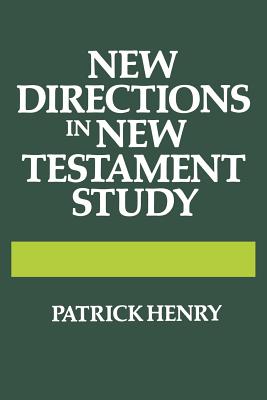
NEW DIRECTIONS IN NT STUDY
Paperback · ISBN 9780334011149
Inclusive of GST and other taxes
Arriving at your doorstep in 10-15 days
Our logisitcs team will make sure everyitem is delivered safely
| ISBN | 9780334011149 |
|---|---|
| Subtitle | NEW DIRECTIONS IN NT STUDY |
| Publisher | SCM Press |
| Publication date | June 2012 |
| Language | English |
| MRP | £25.00 GBP |
| Page count | 302 |
| Item weight | 94 g |
It is more than a decade since any author attempted to survey recent developments in New Testament study. Small wonder, given the vast amount of literature produced on the subject and the complexity of the issues involved. No worthwhile survey can still adopt the approach common in the mid-sixties, when commentators could content themselves with reporting the latest on Q or the authorship of Ephesians or the reliability of Acts. New Testament study is no longer an isolated discipline, and an appreciation of the present scene requires attention to the influence of sociology, psychology and the liberal arts on research as well as a wider knowledge of first-century Judaism and a new climate in ecumenical biblical scholarship. Dr Henry has a fascinating story to tell. After setting the current scene he presents the fundamental thesis of his account, that thinking historically is vitally important and has positive implications for spiritual life. Arguing that several of the questions with which Christians are concerned today were already apparent in the early years of the church, he goes on to discuss major religious, cultural and intellectual factors in the shaping of early Christianity, Judaism and Gnosticism. After chapters on Jesus and Paul come evaluations of sociology, comparative religion and psychology and an account of the astonishing development of Roman Catholic scholarship in the past thirty years. The book ends with a consideration of present and future implications of these developments.
Log in to write a review for this book.
No reviews yet. Be the first to share your opinion.
Biography not available.