Brookes, Barbara Editor
Biography not available.

Browse all FOLKLORE books
Browse all GARDENS books
Browse all GRAPHIC NOVELS books
Browse all HISTORY - MEDIEVAL books
Browse all HUMOUR books
Browse all Juvenile Fiction : Biographical - Other books
Browse all Juvenile Fiction : Historical - Other books
Browse all Juvenile Fiction : Legends, Myths, & Fables - Other books
Browse all Juvenile Fiction : People & Places - Other books
Browse all Juvenile Fiction : People & Places - United States - Other books
Browse all Juvenile Fiction : Religious - Other books
Browse all Juvenile Nonfiction : History - Other books
Browse all Juvenile Nonfiction : Mathematics - Advanced books
Browse all Juvenile Nonfiction : People & Places - Other books
Browse all Juvenile Nonfiction : People & Places - United States - Othe books
Browse all LITERARY STUDIES books
Browse all LONDON books
Browse all Medical : Nursing - Mental Health books
Browse all MIND books
Browse all MUSEOLOGY books
Browse all NON-CLASSIFIABLE books
Browse all NONLINEAR SCIENCE books
Browse all POPULAR SCIENCE books
Browse all RELIGIOUS STUDIES books
Browse all SPIRIT books
Browse all SPORT books
Browse all TRAVEL WRITING books
 Out of Stock
Hardback · ISBN 9780367481865
Inclusive of GST and other taxes
Arriving at your doorstep in 10-15 days
Our logisitcs team will make sure everyitem is delivered safely
| ISBN | 9780367481865 |
|---|---|
| Publisher | Routledge |
| Publication date | June 2020 |
| Language | English |
| MRP | £171.99 GBP |
| Page count | 170 |
| Item weight | 92 g |
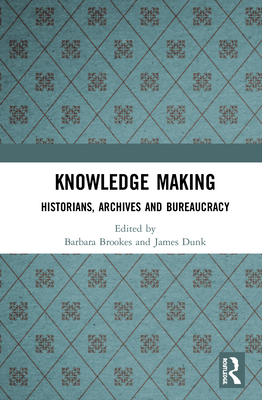
Paper has been the material of bureaucracy, and paperwork performs functions of order, control, and surveillance. Knowledge Making: Historians, Archives and Bureaucracy explores how those functions transform over time, allowing private challenges to the public narratives created by institutions and governments.
Paperwork and bureaucratic systems have determined what we know about the past. It seems that now, as the digital is overtaking paper (though mirroring its forms), historians are able to see the significance of the materiality of paper and its role in knowledge making - because it is no longer taken for granted.
The contributors to this volume discuss the ways in which public and private institutions - asylums, hospitals, and armies - developed bureaucratic systems which have determined the parameters of our access to the past. The authors present case studies of paperwork in different national contexts, which engage with themes of privacy and public accountability, the beginning of record-keeping practices, and their 'ends', both in the sense of their purposes and in what happens to paper after the work has finished, including preservation and curation in repositories of various kinds, through to the place of paper and paperwork in a 'paperless' world.
The chapters in this book were originally published in a special issue of Rethinking History: The Journal of Theory and Practice.
Log in to write a review for this book.
No reviews yet. Be the first to share your opinion.
Biography not available.
Biography not available.